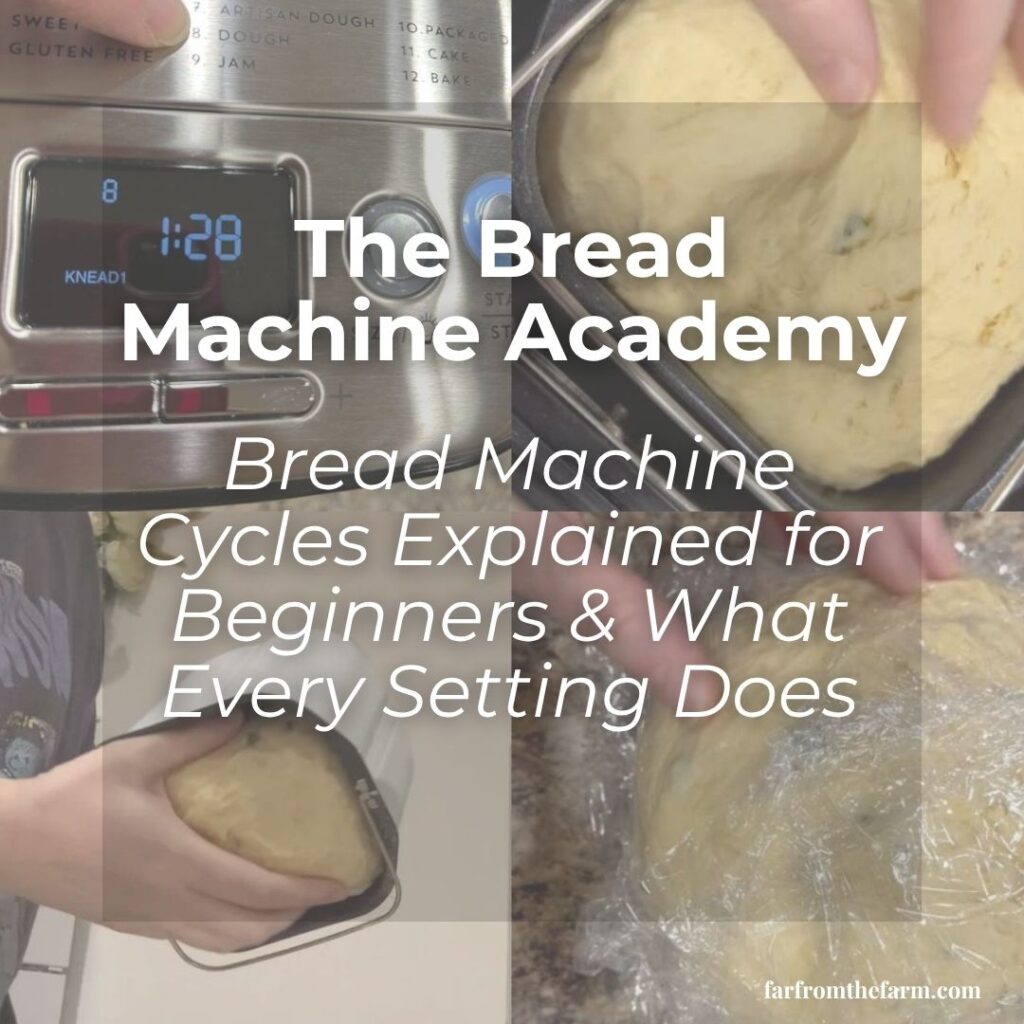
Confused by all those buttons? Here’s what every bread machine cycle actually does and when you should use each one!
“The right bread machine cycle can make the difference between a good loaf and a great one.”
Hi! If you’ve been following me for long you’ll already know this, but for those who are new, welcome to Far From The Farm.
I’m Mona, the Brit behind The Bread Machine Academy. This is where I share the skills, techniques, and troubleshooting tips I’ve learned through hundreds of loaves, so you can bake with confidence and understand what’s happening every step of the way!
When you first buy a bread machine it’s exciting… right up until you look at the control panel.
Instead of one simple “Bake” button you’re suddenly faced with White, French, Whole Wheat, Sweet, Dough, Bake, Jam, Cake, Gluten Free and half a dozen other settings that all sound important.
It’s enough to make anyone wonder if they’ve accidentally bought something far more complicated than they bargained for.
The good news is that you don’t need to understand every programme before you bake your first loaf.
In fact, many bread machine owners use nothing but the Basic or White cycle for months because they’re too nervous to try anything else.
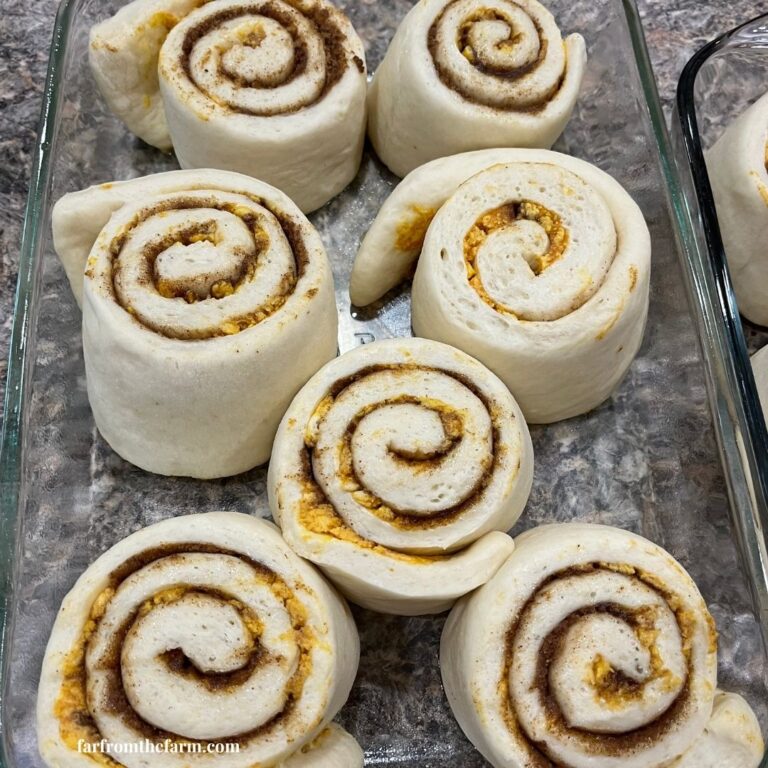
That’s a shame, because those extra programmes aren’t there to confuse you. They’re there to make different types of bread turn out better.
A French loaf needs longer rises than an everyday sandwich loaf. Whole wheat dough benefits from extra time to absorb water. Sweet doughs containing butter, eggs and sugar behave differently again. Even something as simple as pizza dough has its own cycle on many machines.
Once you understand what each programme is designed to do, those mysterious buttons suddenly start making sense.
In this guide I’ll explain what every common bread machine cycle does, when you should use it, which settings you’ll probably use most often, and which ones you may hardly ever touch. I’ll also explain why your machine may not have exactly the same programmes as someone else’s, and why that’s completely normal.
By the end of this guide you’ll be able to look at your control panel with confidence and know exactly which cycle to choose for the bread you’re making!
Recipe Disclaimer
All Far From The Farm recipes are shared as a guide based on what works in my home kitchen. Results may vary depending on your ingredients, equipment, and cooking setup, so always use your own judgement. Please check all ingredients for allergies, intolerances, or dietary needs before making any recipe. Far From The Farm is not responsible for any reactions or outcomes from the use of these recipes. Nutritional information is an estimate only.
Mona – Far From The Farm
Do All Bread Machines Have the Same Cycles?
One of the first things you’ll notice if you start looking at bread machine recipes online is that not every machine has exactly the same buttons.
One recipe might tell you to use the Basic cycle, while another says White Bread. Some machines have an Artisan setting, others don’t. Premium models often include speciality programmes that aren’t available on more budget-friendly machines, and manufacturers all seem to have their own names for very similar functions.
That can make it feel as though you’re missing something important. The good news is that you’re not.
Although the names printed on the control panel might be different, most bread machines work in very similar ways. They all knead, allow the dough to rise, and bake the loaf. The main difference is simply how long each stage lasts and how the machine is programmed to handle different types of dough.
For example, a French loaf usually benefits from longer rising times than a standard white sandwich loaf. Whole wheat dough often needs extra kneading and a longer first rise because whole grains absorb more moisture. Sweet doughs made with butter, eggs, and sugar tend to rise more slowly, so many machines have a dedicated Sweet cycle to compensate.
Once you understand what each programme is trying to achieve, it becomes much easier to choose the correct one, even if your machine uses slightly different names.
The 12 Cycles on the Cuisinart Compact Bread Machine
For this guide I’m using my own Compact Cuisinart Bread Machine, which has been a brilliant little workhorse in my kitchen.
It’s one of the more budget-friendly machines on the market, but don’t let that put you off. I use it five to seven times most weeks for everything from sandwich loaves and pizza dough to dinner rolls, brioche, cinnamon rolls, and hamburger buns. It has earned its place on my countertop.
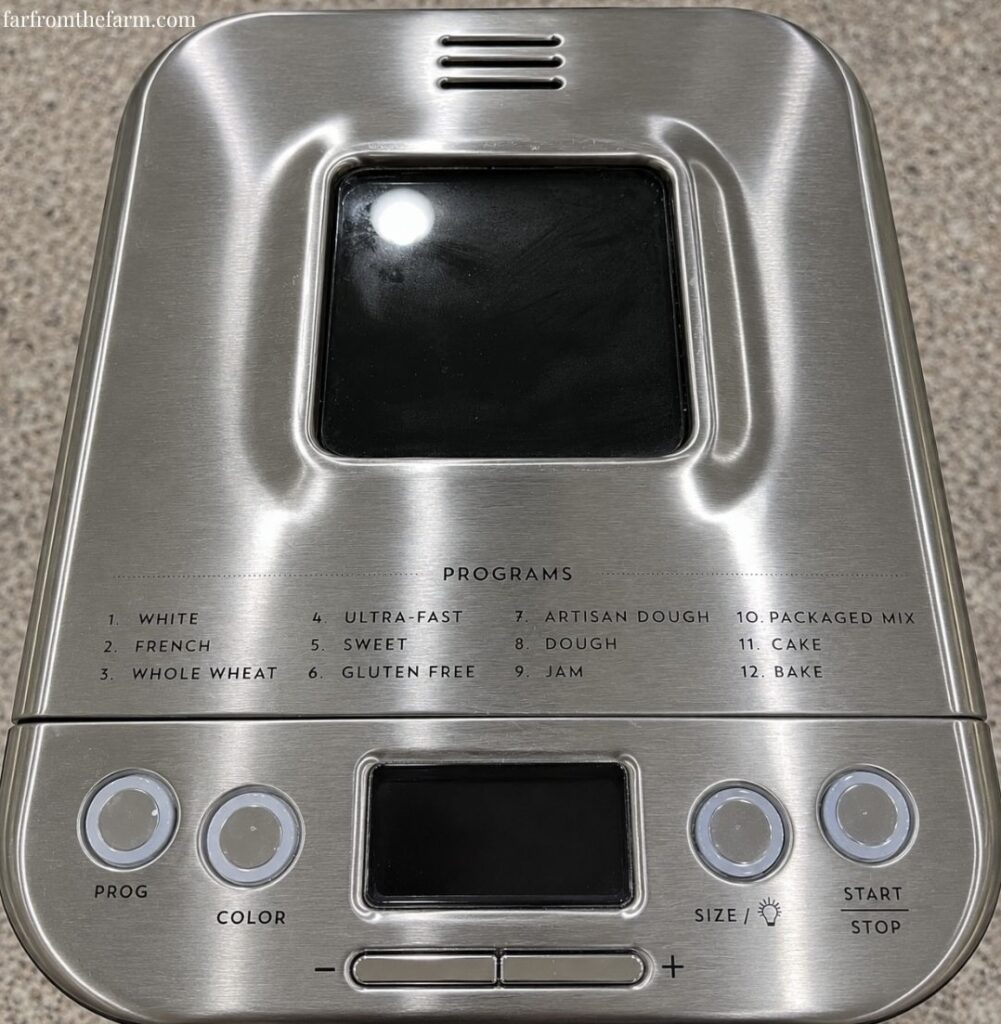
The Cuisinart Compact Bread Machine I own includes these twelve programmes:
| Cycle | Purpose |
|---|---|
| 1. White | Everyday white and sandwich bread |
| 2. French | Crustier loaves with longer rises |
| 3. Whole Wheat | Whole grain breads |
| 4. Ultra Fast | Quicker loaves when you’re short on time |
| 5. Sweet | Enriched doughs with butter, eggs, or sugar |
| 6. Gluten Free | Gluten-free bread recipes |
| 7. Artisan Dough | Speciality dough recipes |
| 8. Dough | Kneads and rises without baking |
| 9. Jam | Homemade jams and preserves |
| 10. Packaged Mix | Store-bought bread mixes |
| 11. Cake | Cakes and quick breads |
| 12. Bake | Baking only, with no mixing or kneading |
If your bread machine has fewer programmes, don’t panic. Many machines simply combine some of these settings together or use different names.
Likewise, if you own a premium machine from brands like Zojirushi or Panasonic, you may see additional speciality programmes designed for specific styles of bread.
The important thing isn’t memorising every button.
It’s understanding what each cycle is designed to do.
Once you’ve got that, you can confidently follow almost any bread machine recipe.
Available on Amazon.com [ad]


1. White (Basic) Cycle
If you’re only ever going to use one programme on your bread machine, this will probably be it.
The White cycle (sometimes called Basic on other machines) is designed for everyday loaves made with white bread flour or all-purpose flour. It follows a fairly balanced schedule of kneading, rising, and baking, making it suitable for the majority of standard sandwich bread recipes.
This is the programme I recommend every beginner starts with because it’s forgiving and works well with the recipes most people want to make first.
Typical uses include:
- White sandwich bread
- Dinner rolls (if baking in the machine)
- Everyday loaves
- Basic farmhouse bread
Once you’ve become comfortable using your machine, you’ll probably find yourself returning to this cycle more than any other.
2. French Cycle
Despite the name, the French cycle isn’t just for French bread.
Instead, it’s designed for lean doughs made without much fat or sugar. Compared to the White cycle, it usually gives the dough a longer rise and often a slightly longer bake, allowing more flavour to develop before the loaf goes into the oven.
The result is usually a loaf with a chewier crumb and a firmer crust.
It’s a great choice for recipes that rely on simple ingredients rather than enriched doughs.
Typical uses include:
- French bread
- Italian-style loaves
- Rustic country bread
- Crusty artisan-style bread
Don’t expect a bakery baguette from your bread machine, though. Most bread machines still bake inside a tall loaf pan, so the shape will always be different.
3. Whole Wheat Cycle
Whole wheat flour behaves very differently from white flour.
Because it contains the bran and germ, it absorbs more liquid and takes longer to develop gluten. If you tried baking many whole wheat recipes on the White cycle, the loaf would often be dense and heavy because it simply wouldn’t have enough time to rise properly.
That’s why manufacturers include a dedicated Whole Wheat programme.
Most machines extend both the resting and rising stages, giving the flour more time to hydrate before baking begins.
This cycle is ideal for:
- Whole wheat sandwich bread
- Honey wheat bread
- Multigrain loaves
- Recipes containing a high percentage of wholemeal flour
Even if your recipe only contains half whole wheat flour, this cycle often produces a better result than the standard White programme.
4. Ultra-Fast (Rapid or Express) Cycle
Almost every manufacturer includes some kind of quick-bake programme. It sounds wonderful in theory. Fresh bread in around an hour.
The trade-off is that something has to be sacrificed to make that happen.
Rapid cycles shorten the kneading and rising stages significantly, which means the yeast has far less time to develop flavour and structure. The finished loaf is often perfectly edible, but it’s rarely as light or as flavourful as bread baked on the standard programmes.
They’re best saved for occasions when time is more important than perfection.
Use the Ultra-Fast cycle when:
- You need bread in a hurry.
- You’re using a recipe specifically written for a rapid cycle.
- You’re happy to trade a little texture for speed.
Personally, I almost never use this setting. Since homemade bread already takes very little hands-on effort in a bread machine, I’d usually rather wait a little longer for a loaf with better flavour and texture.
5. Sweet Cycle
Sweet doughs need a gentler approach than ordinary bread.
Recipes containing butter, eggs, milk, sugar or honey tend to rise more slowly because those rich ingredients affect how yeast behaves. A Sweet cycle compensates for this by adjusting the kneading and rising times, allowing enriched doughs to develop properly without overworking them.
If you’ve ever wondered why a brioche recipe doesn’t always turn out well on the Basic setting, this is often the reason.
The Sweet cycle is perfect for:
- Brioche
- Cinnamon raisin bread
- Fruit bread
- Challah
- Sweet breakfast loaves
Many machines also bake these recipes at a slightly lower temperature to help prevent the extra sugar from browning too quickly.
6. Gluten-Free Cycle
One of the newer additions to many bread machines is a dedicated Gluten-Free programme.
Because gluten-free dough behaves very differently from traditional bread dough, it doesn’t need long kneading times or multiple rises. In fact, overmixing can often make gluten-free breads worse rather than better.
Instead, this cycle is designed specifically for gluten-free recipes using specialist flour blends and binders such as xanthan gum or psyllium husk.
If you regularly bake gluten-free bread, this programme can produce much more reliable results than trying to adapt a standard White cycle.
Even if your machine doesn’t have this setting, don’t panic. Plenty of people still bake excellent gluten-free loaves using other programmes, although recipes usually need to be written with that in mind.
7. Artisan Dough Cycle
Some premium bread machines include an Artisan or Homemade Dough programme.
These are designed to produce breads with a more open crumb by using longer fermentation times and gentler handling.
You’ll usually find this setting on higher-end machines from brands like Zojirushi or Panasonic rather than budget-friendly models.
If your machine doesn’t have an Artisan programme, don’t worry. You can still make excellent artisan-style bread by using the regular Dough cycle and allowing the shaped dough to rise a little longer before baking.
The cycle is a nice bonus rather than an essential feature.
8. Dough Cycle
If I had to choose just one programme to keep on my bread machine, this would be it. In fact, around 95% of what I make uses the Dough cycle.
A lot of people assume bread machines are only useful for baking sandwich loaves, but that’s barely scratching the surface.
The Dough cycle mixes, kneads and proves the dough for you, then stops before baking. You simply remove the finished dough, shape it however you like, let it rise if needed, and bake it in your regular oven.
For me, this is where a bread machine really earns its place on the kitchen counter.
I use it for:
- Pizza dough
- Burger buns
- Hot dog buns
- Cinnamon rolls
- Dinner rolls
- Sandwich rolls
- Brioche
- Breadsticks
- Garlic knots
- Pretzels
- Sweet rolls
- Monkey bread
- Stromboli
- Calzones
Instead of spending fifteen or twenty minutes kneading dough by hand, I simply add the ingredients, press one button, and walk away.
As a busy military family, that’s exactly the sort of kitchen shortcut I appreciate. While the machine does all the hard work, I can get on with everything else that needs doing around the house.
If you’ve been browsing my bread machine recipes, you’ll probably notice that most of them use the Dough cycle before being baked in a conventional oven. It gives you the convenience of a bread machine with the shape, crust and flexibility of oven baking.
9. Jam Cycle
The Jam cycle is probably the programme most people forget their bread machine even has.
Rather than kneading dough, the machine gently heats and stirs fruit while it cooks down into jam or preserves.
It’s perfect if you grow your own fruit or simply enjoy making small homemade batches.
Popular options include:
- Strawberry jam
- Raspberry jam
- Blackberry jam
- Peach preserves
- Mixed berry jam
Because the paddle keeps everything moving throughout the cooking process, there’s much less chance of the fruit catching on the bottom compared to cooking it in a saucepan.
10. Packaged Mix Cycle
Some machines include a dedicated setting for boxed bread mixes.
These mixes usually contain the flour, yeast and dry ingredients already measured for you. All you need to add is water, butter or oil according to the packet instructions.
Because every manufacturer formulates their mixes slightly differently, this cycle is designed to suit those ready-made products rather than homemade recipes.
If your machine doesn’t have a Packaged Mix programme, don’t worry. Most bread mixes work perfectly well on the standard White or Basic cycle.
11. Cake Cycle
This surprises a lot of people. Yes, many bread machines really can make cake.
The Cake programme works differently from the bread settings because it doesn’t rely on yeast. Instead, it mixes the batter before baking it immediately, making it suitable for recipes that use baking powder or baking soda instead.
People often use it for:
- Lemon loaf cake
- Banana bread
- Chocolate loaf cake
- Pound cake
- Gingerbread
- Quick breads
The texture won’t be identical to a cake baked in the oven, but it’s a fun feature to experiment with if you enjoy making loaf cakes.
12. Bake Only Cycle
The Bake programme doesn’t mix or knead anything. It simply turns the heating element on.
This makes it surprisingly useful for rescuing loaves that need a little longer to finish baking or for recipes that have already been prepared separately.
Some people also use Bake Only after shaping dough by hand if they want to use the bread machine as a tiny countertop oven.
It’s not a programme most beginners use very often, but it’s handy to know it’s there.
Which Cycle Should You Use?
When you’re new to bread machines, it’s easy to overthink which button to press. The truth is that most home bakers regularly use just a handful of programmes.
If you’re ever unsure, this is a good starting point:
| If you’re making… | Use this cycle |
|---|---|
| Everyday sandwich bread | White / Basic |
| Crusty rustic bread | French |
| Whole wheat bread | Whole Wheat |
| Brioche or sweet breads | Sweet |
| Pizza, rolls, buns or cinnamon rolls | Dough |
| Gluten-free recipes | Gluten-Free |
| Banana bread or loaf cake | Cake |
| Homemade jam | Jam |
| Finishing a loaf | Bake Only |
As you become more familiar with your machine, choosing the right cycle quickly becomes second nature.
My Two Favourite Bread Machine Cycles
If someone asked me which two programmes I use most, the answer would be easy: White and Dough.
The White cycle is my go-to whenever I want the machine to handle the entire loaf from start to finish. It’s reliable, simple, and perfect for everyday sandwich bread.
The Dough cycle, though, is probably the hardest-working button in my kitchen. I use it several times a week for pizza dough, dinner rolls, hamburger buns, hot dog buns, cinnamon rolls, pretzels, brioche, and so many of the recipes you’ll find here on Far From The Farm.
Those two programmes alone probably account for well over 90% of what I use my bread machine for. If you’re new to bread machines, I’d start by getting comfortable with those settings first.
Once you’ve mastered them, you’ll already be able to make an incredible variety of homemade breads and doughs with very little effort!
Why You’ll Love This Guide
- Explains every major bread machine cycle in simple language.
- Helps you choose the correct programme with confidence.
- Shows which cycles are actually worth using regularly.
- Explains the differences between budget and premium machines.
- Gives practical examples for every setting.
- Perfect for complete beginners.
FAQ
For me, it’s the Dough cycle without question. I use it several times a week for pizza dough, burger buns, cinnamon rolls, dinner rolls and countless other recipes.
You probably could, but you wouldn’t always get the best results. Rich doughs, whole wheat breads and gluten-free recipes all benefit from programmes designed specifically for them.
Every manufacturer is different. Budget machines often have fewer programmes, while premium models may include artisan, homemade, sourdough or custom settings. The core functions, however, are usually very similar.
Not necessarily. Premium machines often include extra features, quieter motors and more customisation, but plenty of affordable bread machines produce excellent bread. My own compact Cuisinart has made hundreds of successful loaves and doughs, and it proves you don’t need to spend a fortune to enjoy homemade bread.
Why You’ll Love Using a Bread Machine In Your Kitchen!
If you’re new here, you’ll quickly learn that I am such a fan of using a bread machine for dough. It has been one of the biggest helps in my kitchen, especially during busy or overwhelming seasons.
My parents gifted me this little Compact Cuisinart Bread Machine recently when I moved from the UK to the States after getting married, and it has worked like a little powerhouse ever since!

It kneads beautifully. It rises dough evenly. It keeps everything contained in one pan so I am not dealing with flour across every surface of the kitchen.
And on days where the house feels chaotic or I am juggling too much, I can add the ingredients, press the dough button, and let it get on with the work while I focus on everything else.
It takes away so much of the guesswork and makes homemade bread, pizza dough, cinnamon rolls, soft rolls, and sweet bakes feel much simpler.
It has also been a real blessing for our budget. Homemade dough costs pennies compared to store prepared versions and certainly compared to eating out. As a military family on baby step 2 of our debt free journey, little savings like that matter across an entire month.
Check out The Bread Machine Academy today!
Learn bread machine baking with beginner-friendly guides on flour, yeast, ingredients, troubleshooting, dough cycles, tips, and techniques!
If you have ever felt intimidated by bread making, this is your gentle nudge to give it a try. A dough cycle handles all the kneading for you.
You get soft, reliable, fluffy dough without standing over a counter for ages or worrying if things rose the way they should. It makes homemade cooking feel doable, even on days that are far from calm.
Browse Bread Machine Recipe Type
There are so many beginner friendly ideas to help you feel confident and excited about homemade dough – join the Facebook group today and share recipes and tips for perfect bread, every time!
Join our new Facebook Group!
THE BEST BREAD STARTS WITH THE RIGHT COMMUNITY…
Beginner-Friendly Bread Machine and Bread Recipes is our new Facebook group for home bakers who want bread baking to feel simple, doable, and encouraging.

The Takeaway
Understanding your bread machine’s cycles is one of the quickest ways to become a more confident baker.
Once you know what each programme is designed to do, the row of buttons across the front suddenly feels far less intimidating. Instead of guessing, you’ll understand why one recipe calls for the Sweet cycle while another uses Dough or Whole Wheat.
The good news is that you don’t need to master every programme overnight. Start with the basics, experiment a little, and before long choosing the right cycle will become second nature. Your bread machine is designed to make baking easier, and learning what each setting does is the first step towards getting the very best from it!
Continue Learning in the Bread Machine Academy!
Ready for the next lesson?
- Understanding the Perfect Dough Ball
- Bread Flour vs All-Purpose Flour
- Bread Machine Yeast vs Active Dry Yeast
- Bread Machine Home Page
- The Bread Machine Academy!
Share & Rate This Guide!
If this guide helped you understand your bread machine’s cycles a little better, I’d love to hear from you! Leave a comment below and let me know which cycle you use most often or if there’s another topic you’d like me to cover in The Bread Machine Academy.
Last update on 2026-10-08 / Affiliate links / Images from Amazon Product Advertising API