An Easy Beginner’s Guide to Understanding Bread Flour, Protein, Gluten and When You Can Substitute One for the Other?
“Bread flour isn’t automatically better than all-purpose flour. The best choice depends on what you’re baking, and understanding the difference can make a noticeable difference to your homemade bread.”
Hi! If you’ve been following me for long you’ll already know this, but for those who are new, welcome to Far From The Farm.
I’m Mona, the Brit behind The Bread Machine Academy. This is where I share the skills, techniques, and troubleshooting tips I’ve learned through hundreds of loaves, so you can bake with confidence and understand what’s happening every step of the way!
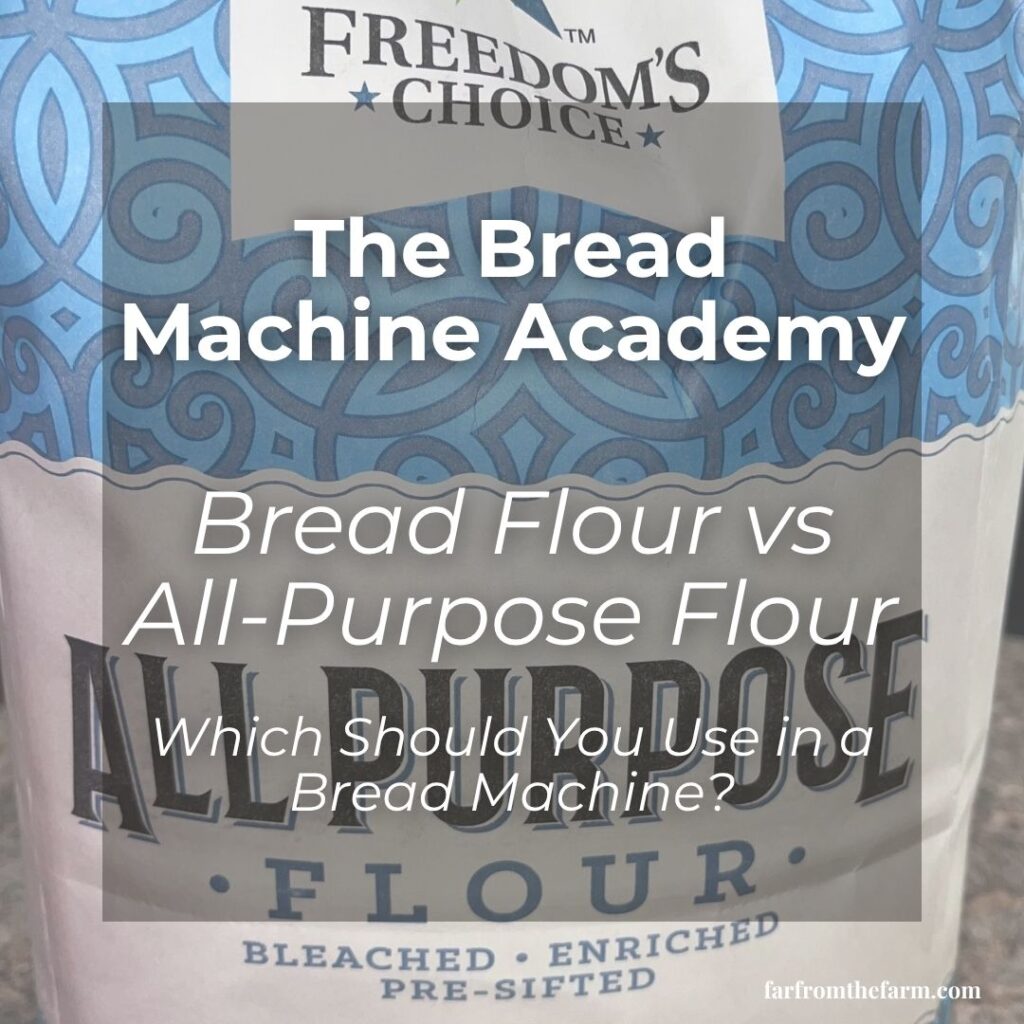
If you’ve spent more than five minutes looking for bread machine recipes, you’ve probably noticed that some call for bread flour while others use all-purpose flour.
That naturally leads to questions. Questions like, do you really need bread flour?Can you substitute all-purpose flour? Will your bread machine still work if you use the “wrong” one?
The good news is that this isn’t nearly as complicated as the internet sometimes makes it sound. Both flours have an important place in bread making, and neither one is automatically better than the other. The right choice simply depends on the type of bread you’re trying to make.
Understanding the difference is one of those small pieces of knowledge that makes you much more confident as a baker. Instead of blindly following a recipe and hoping for the best, you’ll begin to understand why one flour works better than another for certain breads.
As with all the guides in The Bread Machine Academy, my goal isn’t to turn you into a professional baker overnight. I simply want to help you understand what’s happening inside your bread machine so you can get more consistent results and feel confident enough to experiment with your own baking.
So let’s start with the basics…
Recipe Disclaimer
All Far From The Farm recipes are shared as a guide based on what works in my home kitchen. Results may vary depending on your ingredients, equipment, and cooking setup, so always use your own judgement. Please check all ingredients for allergies, intolerances, or dietary needs before making any recipe. Far From The Farm is not responsible for any reactions or outcomes from the use of these recipes. Nutritional information is an estimate only.
Mona – Far From The Farm
What Is Bread Flour?
Bread flour is simply wheat flour that contains more protein than ordinary all-purpose flour.
That extra protein is important because once it’s mixed with water and kneaded, it develops gluten.
Gluten forms a stretchy network throughout the dough that traps the gas produced by the yeast. As those tiny pockets of gas expand, your bread rises and develops the soft texture we’re all hoping for.
Because bread flour contains more protein, it usually develops a stronger gluten structure than all-purpose flour.
That stronger structure often means:
- Better oven spring
- Taller loaves
- Chewier texture
- Stronger dough
- Better support for enriched breads and pizza dough
Most bread flours contain somewhere between 12% and 14% protein, although this varies slightly depending on the manufacturer.
What Is All-Purpose Flour?
All-purpose flour is exactly what the name suggests.
It’s designed to work reasonably well for lots of different recipes rather than being specialised for one particular job.
You’ll use it for:
- Cookies
- Cakes
- Muffins
- Pancakes
- Biscuits
- Pastries
- Many bread recipes
Because it contains slightly less protein than bread flour, it usually produces a softer, more tender crumb.
Most all-purpose flours contain around 10% to 12% protein, although some brands are a little higher and others slightly lower.
For many everyday bread recipes, especially if you’re just starting out, all-purpose flour can still produce excellent results.
In fact, plenty of my own bread machine recipes use all-purpose flour because it gives exactly the texture I’m looking for.
Why Does Protein Matter?
One of the biggest misconceptions beginners have is that protein is there to make the bread healthier.
That’s not really why bakers pay attention to it. Protein affects how much gluten the flour can develop. The higher the protein content, the stronger the gluten network usually becomes.
That stronger network traps more of the carbon dioxide produced by the yeast, allowing the dough to rise well while still holding its shape.
Imagine trying to blow up two balloons. One is made from thick rubber. The other is made from very thin plastic. The stronger balloon can stretch further without bursting.
Gluten works in a similar way.
A stronger gluten network supports taller, chewier breads, while a softer gluten network produces a more delicate texture.
Neither is right or wrong. They’re simply suited to different types of baking.
Can You Substitute Bread Flour and All-Purpose Flour?
This is probably the question I get asked most often, and thankfully the answer is reassuring:
Yes, you usually can.
Bread machines aren’t nearly as fussy as many people think, and swapping one flour for the other rarely ends in disaster. The finished loaf may be a little different in texture or height, but most of the time you’ll still end up with perfectly good homemade bread.
If you’re halfway through measuring out ingredients and suddenly realise you’ve run out of bread flour, don’t panic. All-purpose flour will usually get you out of trouble.
Likewise, if a recipe calls for all-purpose flour and you only have bread flour in the cupboard, it’s generally fine to use that instead.
The biggest differences tend to be in the finished texture rather than whether the recipe works at all.
When Bread Flour Makes the Biggest Difference
Although the two flours can often be substituted, there are certain recipes where bread flour really earns its place.
Recipes that benefit from bread flour include:
- Sandwich bread
- French bread
- Italian loaves
- Pizza dough
- Bagels
- Pretzels
- Chewy bread rolls
- Hoagie rolls
- Sub rolls
These recipes rely on a strong gluten structure to create their chewy texture and good rise.
Using bread flour often produces a loaf that’s slightly taller with a firmer structure, making it especially good for sandwiches that need to hold fillings without falling apart.
For pizza dough, the extra protein also helps create that lovely chewy crust many people are aiming for.
When All-Purpose Flour Works Beautifully
On the other hand, not every bread needs lots of strength. Sometimes a softer flour produces a softer result, which is exactly what you’re after.
You can happily use all-purpose flour for recipes like:
- Soft dinner rolls
- Cinnamon rolls
- Brioche
- Milk bread
- Sweet breads
- Monkey bread
- Pull-apart rolls
The slightly lower protein content often creates a softer, fluffier crumb that works beautifully in enriched doughs.
Many beginners are surprised to learn that some of the softest rolls they’ve ever eaten were made with ordinary all-purpose flour.
It all comes back to choosing the flour that best suits the finished texture you’re hoping to achieve.
Which Flour Do I Use?
The honest answer is… Both.
I don’t believe every recipe needs bread flour simply because it’s called “bread” flour.
Sometimes it’s absolutely the best choice. Other times, all-purpose flour gives me exactly the texture I’m looking for.
If you’ve spent any time looking through my bread machine recipes, you’ll notice I use both depending on what I’m making.
If I want a sturdy sandwich loaf or a chewy pizza crust, I’ll usually reach for bread flour. If I’m making soft dinner rolls or a sweet enriched dough, I often use all-purpose flour instead.
Rather than thinking one flour is better than the other, I prefer to think of them as different tools in the same toolbox.
Does the Brand of Flour Matter?
Long story short – it can.
Different manufacturers mill their flour slightly differently, and protein percentages aren’t identical across every brand.
One bag of bread flour might contain 12.5% protein, while another contains almost 14%. The same applies to all-purpose flour.
Brands like King Arthur, Gold Medal, Pillsbury, and store brands can all behave a little differently in the bread machine.
That doesn’t mean one is right and another is wrong. It simply explains why you might occasionally need to add an extra teaspoon of water or a tablespoon of flour, even when you’re baking exactly the same recipe.
This is one of the reasons I recommend checking your dough ball during the first kneading cycle.
Instead of worrying about tiny differences between flour brands, simply look at how the dough is behaving and make a small adjustment if necessary.
Your dough will always tell you more than the label on the bag!
Can I Mix Bread Flour and All-Purpose Flour?
Absolutely. In fact, many experienced home bakers do exactly that.
Mixing the two allows you to create something in between, combining some of the strength of bread flour with the softer texture of all-purpose flour.
For example, you might use:
- Half bread flour and half all-purpose flour for dinner rolls.
- Mostly bread flour with a little all-purpose flour for sandwich bread.
- Mostly all-purpose flour with a little bread flour for softer enriched doughs.
There aren’t any strict rules here.
As you bake more often, you’ll naturally begin experimenting to find the texture you and your family enjoy most.
That’s one of the lovely things about bread making. It becomes less about following recipes perfectly and more about understanding how small changes affect the finished loaf.
Common Flour Mistakes Beginners Make
One of the biggest misconceptions I come across is the idea that bread flour is always the “best” flour and that all-purpose flour should never be used for bread.
The truth is that both flours have their place, and neither one is automatically better.
It all depends on the type of bread you’re trying to make. A chewy French loaf and a soft cinnamon roll aren’t aiming for the same texture, so it makes sense that they don’t always use the same flour.
Another mistake is worrying too much about matching the exact flour brand used in a recipe. While different brands can absorb water slightly differently, those small differences are easy to manage by checking your dough ball during the first kneading cycle. That’s a far more useful habit than chasing a particular bag of flour.
Finally, don’t be afraid to experiment. Once you’ve baked a recipe a few times, try making it with a different flour and compare the results. You’ll soon start discovering the textures your own family enjoys most.
My Flour Cupboard
People sometimes assume I only keep bread flour in the pantry because I bake so much bread. Actually, I nearly always have both.
Bread flour is my first choice for sturdy sandwich loaves, pizza dough, bagels and recipes where I want plenty of chew.
All-purpose flour gets used just as often for softer breads, enriched doughs, dinner rolls, cinnamon rolls and everyday baking.
If I could only keep one, I’d probably choose all-purpose flour because it’s the most versatile. It can make everything from cakes and cookies to homemade bread, even if the loaf isn’t quite as chewy as one made with bread flour.
Having both on hand simply gives me more flexibility, but plenty of wonderful homemade bread has been baked using nothing more than a bag of ordinary all-purpose flour.
Why You’ll Love This Guide?!
- Explains the real difference between bread flour and all-purpose flour.
- Helps you choose the right flour with confidence.
- Shows when substitutions work well.
- Explains protein content in simple, beginner-friendly language.
- Helps you understand why some breads are chewy while others are soft.
- Gives practical advice you can apply to almost every bread machine recipe.
- Perfect for anyone learning to bake bread from scratch.
FAQ
Yes. Many bread machine recipes work perfectly with all-purpose flour. Your loaf may be slightly softer and a little less chewy than one made with bread flour, but it should still bake beautifully.
Usually, yes. Bread flour can replace all-purpose flour in most yeast bread recipes. The finished bread may have a firmer texture and slightly more chew because of the higher protein content.
Bread flour contains more protein, which allows the dough to develop a stronger gluten network. That stronger structure traps more gas during rising, helping support a taller loaf.
If you’re mainly planning to bake sandwich bread, bread flour is an excellent place to start.
If you want one flour that can be used for almost everything in your kitchen, all-purpose flour is probably the better choice.
Many home bakers eventually keep both in the cupboard because each has its own strengths.
Absolutely. Mixing the two is very common and gives you a balance between strength and softness. Many bakers do this regularly depending on the texture they’re trying to achieve.
The Takeaway
Choosing between bread flour and all-purpose flour doesn’t have to feel complicated.
Once you understand that the biggest difference is simply protein content, the rest starts to make much more sense. Bread flour creates stronger, chewier doughs, while all-purpose flour produces softer, more tender bakes.
Neither flour is better than the other. They’re simply designed for different jobs.
As you bake more often, you’ll quickly develop a feel for which one suits the recipe in front of you. And if you ever need to substitute one for the other, don’t panic. Most of the time your bread machine will still reward you with a lovely homemade loaf.
Continue Learning in the Bread Machine Academy!
Ready for the next lesson?
- Understanding the Dough Ball
- Bread Machine Cycles Explained
- Bread Machine Yeast vs Active Dry Yeast
- Bake Your First Bread Machine Loaf
Or, if you’re ready to start baking, head over to my complete Bread Machine Recipe Hub, where you’ll find beginner-friendly recipes for sandwich bread, dinner rolls, pizza dough, brioche, cinnamon rolls, hamburger buns, and much more.
Why You’ll Love Using a Bread Machine In Your Kitchen!
If you’re new here, you’ll quickly learn that I am such a fan of using a bread machine for dough. It has been one of the biggest helps in my kitchen, especially during busy or overwhelming seasons.
My parents gifted me this little Compact Cuisinart Bread Machine recently when I moved from the UK to the States after getting married, and it has worked like a little powerhouse ever since!

It kneads beautifully. It rises dough evenly. It keeps everything contained in one pan so I am not dealing with flour across every surface of the kitchen.
And on days where the house feels chaotic or I am juggling too much, I can add the ingredients, press the dough button, and let it get on with the work while I focus on everything else.
It takes away so much of the guesswork and makes homemade bread, pizza dough, cinnamon rolls, soft rolls, and sweet bakes feel much simpler.
It has also been a real blessing for our budget. Homemade dough costs pennies compared to store prepared versions and certainly compared to eating out. As a military family on baby step 2 of our debt free journey, little savings like that matter across an entire month.
Check out The Bread Machine Academy today!
Learn bread machine baking with beginner-friendly guides on flour, yeast, ingredients, troubleshooting, dough cycles, tips, and techniques!
If you have ever felt intimidated by bread making, this is your gentle nudge to give it a try. A dough cycle handles all the kneading for you.
You get soft, reliable, fluffy dough without standing over a counter for ages or worrying if things rose the way they should. It makes homemade cooking feel doable, even on days that are far from calm.
Browse Bread Machine Recipe Type
There are so many beginner friendly ideas to help you feel confident and excited about homemade dough – join the Facebook group today and share recipes and tips for perfect bread, every time!
Join our new Facebook Group!
THE BEST BREAD STARTS WITH THE RIGHT COMMUNITY…
Beginner-Friendly Bread Machine and Bread Recipes is our new Facebook group for home bakers who want bread baking to feel simple, doable, and encouraging.

Share & Rate This Guide!
If this guide helped you understand the difference between bread flour and all-purpose flour, I’d love to hear from you! Leave a comment below and let me know which flour you reach for most often, or tell me what you’re planning to bake next!