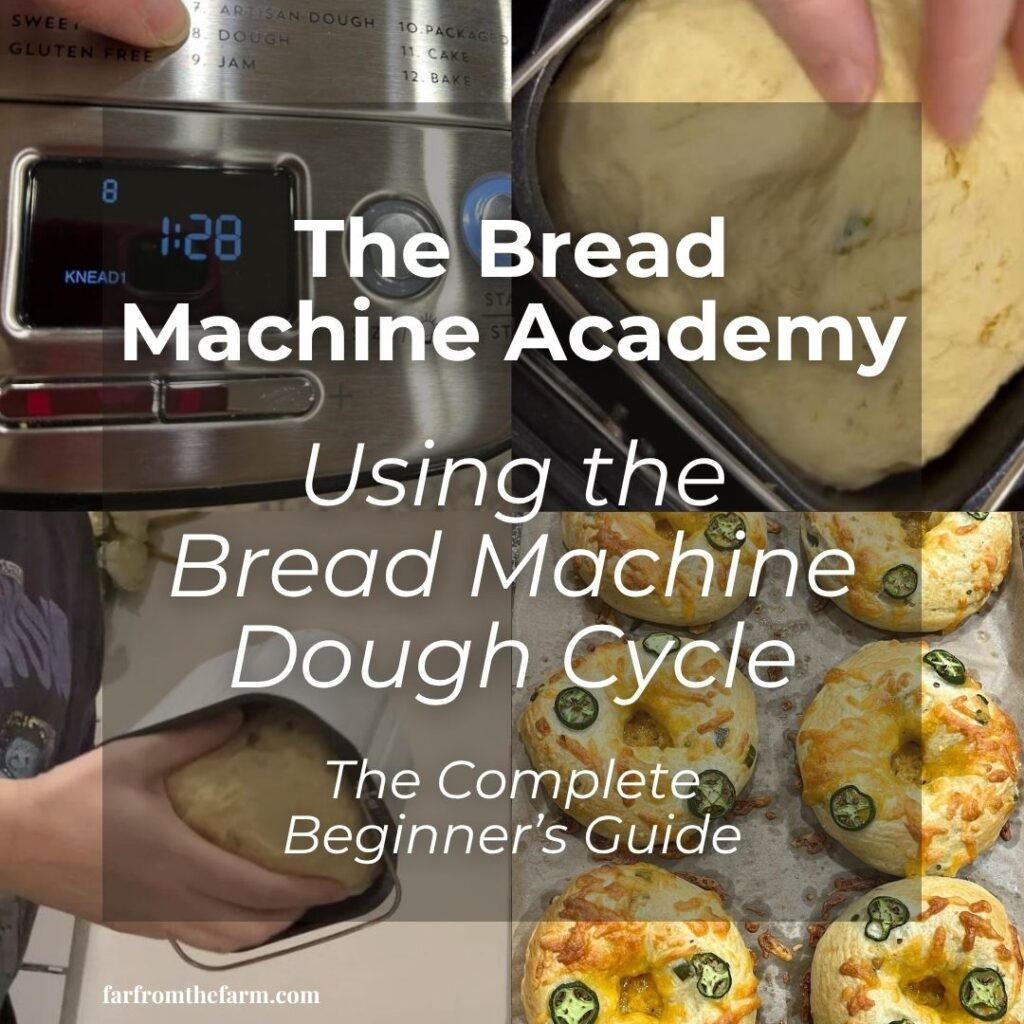
Everything You Need to Know About Your Bread Machine’s Most Versatile Setting!
“If I could only keep two buttons on my bread machine, they’d be the White cycle and the Dough cycle. Between them, I can make almost everything my family eats.”
Hi! If you’ve been following me for long you’ll already know this, but for those who are new, welcome to Far From The Farm.
I’m Mona, the Brit behind The Bread Machine Academy. This is where I share the skills, techniques, and troubleshooting tips I’ve learned through hundreds of loaves, so you can bake with confidence and understand what’s happening every step of the way!
When most people buy a bread machine, they picture using it to bake the occasional loaf of sandwich bread.
There’s absolutely nothing wrong with that. Fresh homemade bread is one of the biggest reasons many of us buy a bread machine in the first place.
But after making hundreds of recipes over the years, I’ve discovered that the real magic isn’t always in the baking cycle.
It’s in the Dough cycle.
In fact, I probably use my bread machine as a dough maker five times more often than I use it as a bread maker.
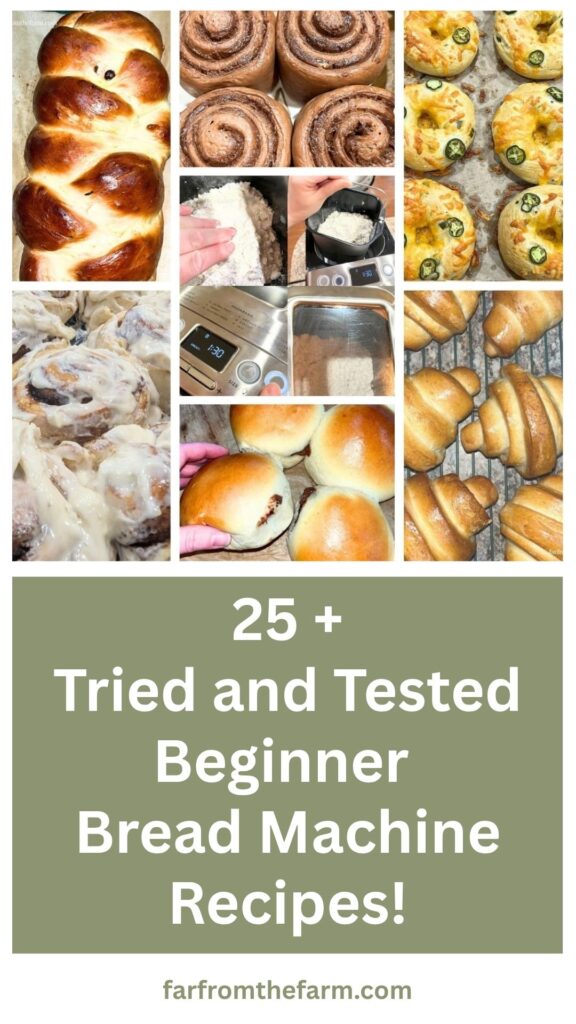
Instead of standing at the counter kneading dough by hand, I simply add my ingredients, press one button, and let the machine do all the hard work while I get on with everything else.
By the time the programme finishes, I’m left with beautifully kneaded, perfectly risen dough that’s ready to shape into whatever I’m making that day.
It’s one of the biggest time-savers in my kitchen, and honestly one of the reasons I recommend bread machines so often to beginner bakers.
If you’ve only ever used your machine to bake complete loaves, you’re about to discover just how versatile it really is.
In this guide, I’ll explain exactly what the Dough cycle does, what happens during the programme, why it’s become my most-used setting, and how you can use it to make everything from pizza dough and dinner rolls to cinnamon rolls, pretzels, brioche, and so much more…
Recipe Disclaimer
All Far From The Farm recipes are shared as a guide based on what works in my home kitchen. Results may vary depending on your ingredients, equipment, and cooking setup, so always use your own judgement. Please check all ingredients for allergies, intolerances, or dietary needs before making any recipe. Far From The Farm is not responsible for any reactions or outcomes from the use of these recipes. Nutritional information is an estimate only.
Mona – Far From The Farm
Ready to Bake More Than Just Sandwich Bread?
One of the biggest misconceptions about bread machines is that they’re only good for baking basic loaves.
The truth is they’re incredible dough makers.
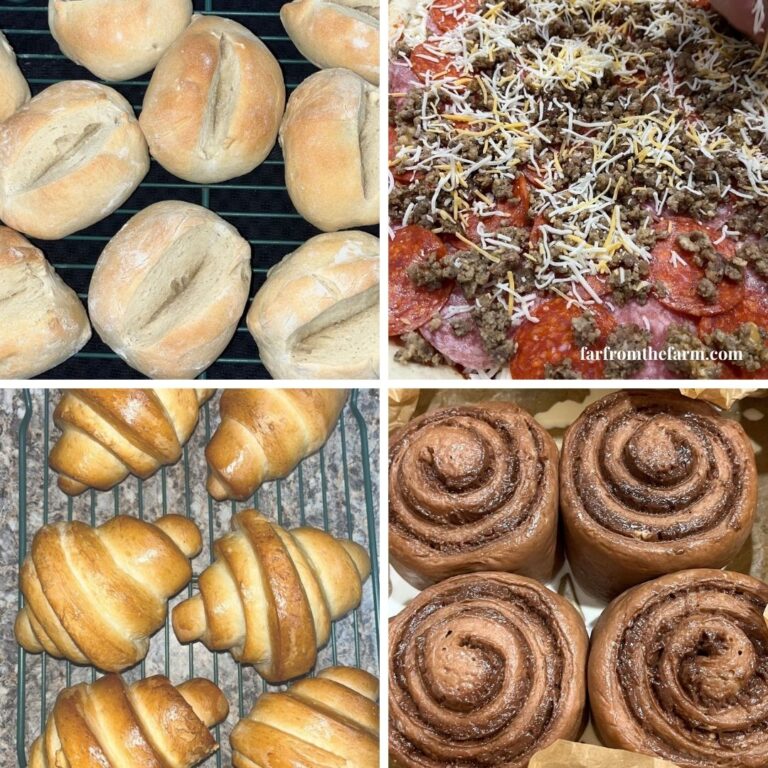
I use the Dough cycle for soft rolls, fluffy burger buns, pizza dough, cinnamon rolls, pretzels, brioche, hot dog buns, breadsticks, calzones and plenty more.
Browse all of my Bread Machine Dough Cycle recipes below and discover just how much your bread machine can do.
What Is the Dough Cycle?
The Dough cycle is exactly what it sounds like. Instead of taking your bread all the way through to a finished loaf, this programme prepares the dough and then stops before the baking stage begins.
During the cycle, your bread machine mixes the ingredients together, kneads the dough until it’s smooth and elastic, and provides a warm environment for the yeast to do its job. By the time the programme finishes, the dough has usually completed its first rise and is ready to be shaped according to your recipe.
From there, you take over.
Some recipes are shaped immediately into rolls or buns before a final rise. Others are divided into pizza bases, pretzels, cinnamon rolls or loaves that will be baked in a conventional oven.
Think of it as having a reliable kitchen assistant that takes care of the hardest, messiest part of bread making for you.
What Happens During the Dough Cycle?
Although every bread machine manufacturer programs their machines slightly differently, most Dough cycles follow the same basic pattern: mixing, kneading, an add-in alert if your machine has one, and then the first rise.
1. Mixing
The program begins by combining your ingredients into a rough dough.
During the first few minutes, the flour and liquid gradually come together as the paddle starts turning. This is also the best time to lift the lid and check your dough ball.
If the dough looks a little dry, add water 1 tsp at a time. If it looks too sticky, sprinkle in flour 1 tbsp at a time.
Small adjustments at this stage can make a huge difference to the finished bake.
Learn More: Read What Should a Bread Machine Dough Ball Look Like?
2. Kneading
Once the ingredients come together, the machine starts kneading properly.
The paddle stretches, folds, and works the dough until it becomes smoother and more elastic. This is the part that saves so much effort compared with kneading by hand.
3. Add-In Beep or Mix-In Alert
Many bread machines, including budget-friendly models like my Cuisinart Compact Bread Maker, beep partway through the cycle to let you know when to add extras.
This is when you would usually add ingredients such as raisins, nuts, chocolate chips, dried fruit, seeds, olives, herbs, or shredded cheese if your recipe calls for them.
The reason the machine waits is simple. If you add delicate ingredients too early, they can be crushed, smeared, or broken down during the main kneading stage.
Some higher-end bread machines even have a separate dispenser that automatically drops these add-ins into the dough at the correct time. That can be handy, but it is absolutely not essential. If your machine simply beeps, you can lift the lid, add the ingredients, close it again, and let the cycle continue.
If your machine does not have an add-in beep, check your manual for guidance. As a general rule, add mix-ins near the end of kneading once the dough has already formed.
4. First Rise
After kneading, the machine provides a warm, enclosed space for the dough to rise.
As the yeast works, the dough expands and becomes softer, lighter, and easier to shape. The exact timing varies between machines, but by the end of the Dough cycle your dough should usually have completed its first rise.
5. The Cycle Ends
Unlike White, French, or Whole Wheat programs, the Dough cycle does not bake the bread.
The machine stops once the dough has been mixed, kneaded, and risen. From there, you remove the dough from the pan, shape it according to your recipe, let it rise again if needed, and bake it in the oven.
Common Dough Cycle Mistakes Beginners Make
The Dough cycle is one of the easiest programmes on a bread machine to use, but there are still a few mistakes that catch beginners out.
One of the most common is removing the dough too early. When the programme finishes, the dough should have completed its first rise and noticeably increased in size. If you stop the cycle halfway through because you’re in a hurry, the dough won’t have had enough time to develop properly and your finished bread may be dense or heavy.
Another mistake is forgetting that the Dough cycle doesn’t bake anything. It sounds obvious, but plenty of new bread machine owners come back an hour and a half later expecting a finished loaf, only to discover a pan full of risen dough! Once the cycle ends, it’s your turn to shape the dough and bake it according to your recipe.
It’s also worth paying attention to your recipe’s instructions after the Dough cycle finishes. Most yeast doughs need one final rise after shaping before they go into the oven. Skipping that final proof often results in rolls or loaves that are smaller and heavier than they should be.
Finally, don’t forget to check your dough ball during the first few minutes of mixing. Even the best recipe can occasionally need a tiny adjustment because of humidity, flour brands, or the weather. Taking thirty seconds to lift the lid and have a quick look is one of the easiest ways to improve your results.
Why You’ll Love Using the Dough Cycle!
- Saves you from kneading dough by hand.
- Mixes, kneads, and proves the dough automatically.
- Perfect for beginner bread makers.
- Gives consistently reliable results.
- Opens up far more recipes than simply baking loaves.
- Great for pizza dough, rolls, buns, pretzels, brioche, cinnamon rolls, and more.
- Keeps flour and sticky dough contained in one pan.
- Makes homemade bread much easier on busy days.
FAQ
Not usually. The Dough cycle ends before baking begins. Most recipes using this programme are designed to be shaped and baked in a conventional oven.
It depends on the machine, but most Dough cycles take between 1½ and 2 hours, including kneading and the first rise.
It’s best to remove it fairly soon after the programme finishes. Leaving dough sitting in the warm bread pan for too long can lead to over-proofing, making it more difficult to shape and affecting the finished bake.
Absolutely. Pizza dough is one of the most popular uses for the Dough cycle and one of the reasons so many people buy a bread machine in the first place.
Yes. Many yeast doughs freeze beautifully after the Dough cycle has finished. Follow your individual recipe for the best stage to freeze and thaw the dough.
The Takeaway
If you’ve only been using your bread machine to bake sandwich loaves, I hope this guide has shown you just how much more it’s capable of.
For me, the Dough cycle is easily the hardest-working programme on the machine. It takes care of the mixing, kneading, and first rise, leaving me free to shape everything from burger buns and pizza dough to cinnamon rolls and pretzels without spending ages working the dough by hand.
It’s simple, reliable, and one of the biggest reasons I recommend a bread machine to anyone who wants to bake more at home without making life more complicated.
Once you become comfortable using the Dough cycle, you’ll quickly discover that your bread machine isn’t just a bread maker. It’s one of the most versatile baking tools in your kitchen.
Continue Learning in the Bread Machine Academy!
Ready for the next lesson?
- Bread Machine Academy Home Page
- Understanding Bread Ingredients
- What Should a Bread Machine Dough Ball Look Like?
- Bread Flour vs All-Purpose Flour
- Bread Machine Yeast vs Active Dry Yeast
Or, if you’re ready to start baking, head over to my Bread Machine Home Page, where you’ll find beginner-friendly recipes for pizza dough, dinner rolls, hamburger buns, cinnamon rolls, pretzels, brioche, and much more.
Why You’ll Love Using a Bread Machine In Your Kitchen!
If you’re new here, you’ll quickly learn that I am such a fan of using a bread machine for dough. It has been one of the biggest helps in my kitchen, especially during busy or overwhelming seasons.
My parents gifted me this little Compact Cuisinart Bread Machine recently when I moved from the UK to the States after getting married, and it has worked like a little powerhouse ever since!

It kneads beautifully. It rises dough evenly. It keeps everything contained in one pan so I am not dealing with flour across every surface of the kitchen.
And on days where the house feels chaotic or I am juggling too much, I can add the ingredients, press the dough button, and let it get on with the work while I focus on everything else.
It takes away so much of the guesswork and makes homemade bread, pizza dough, cinnamon rolls, soft rolls, and sweet bakes feel much simpler.
It has also been a real blessing for our budget. Homemade dough costs pennies compared to store prepared versions and certainly compared to eating out. As a military family on baby step 2 of our debt free journey, little savings like that matter across an entire month.
Check out The Bread Machine Academy today!
Learn bread machine baking with beginner-friendly guides on flour, yeast, ingredients, troubleshooting, dough cycles, tips, and techniques!
If you have ever felt intimidated by bread making, this is your gentle nudge to give it a try. A dough cycle handles all the kneading for you.
You get soft, reliable, fluffy dough without standing over a counter for ages or worrying if things rose the way they should. It makes homemade cooking feel doable, even on days that are far from calm.
Browse Bread Machine Recipe Type
There are so many beginner friendly ideas to help you feel confident and excited about homemade dough – join the Facebook group today and share recipes and tips for perfect bread, every time!
Join our new Facebook Group!
THE BEST BREAD STARTS WITH THE RIGHT COMMUNITY…
Beginner-Friendly Bread Machine and Bread Recipes is our new Facebook group for home bakers who want bread baking to feel simple, doable, and encouraging.

Share & Rate This Guide!
If this guide helped you understand how to get the most from your bread machine’s Dough cycle, I’d love to hear from you. Leave a comment below and let me know what you’re planning to bake first!