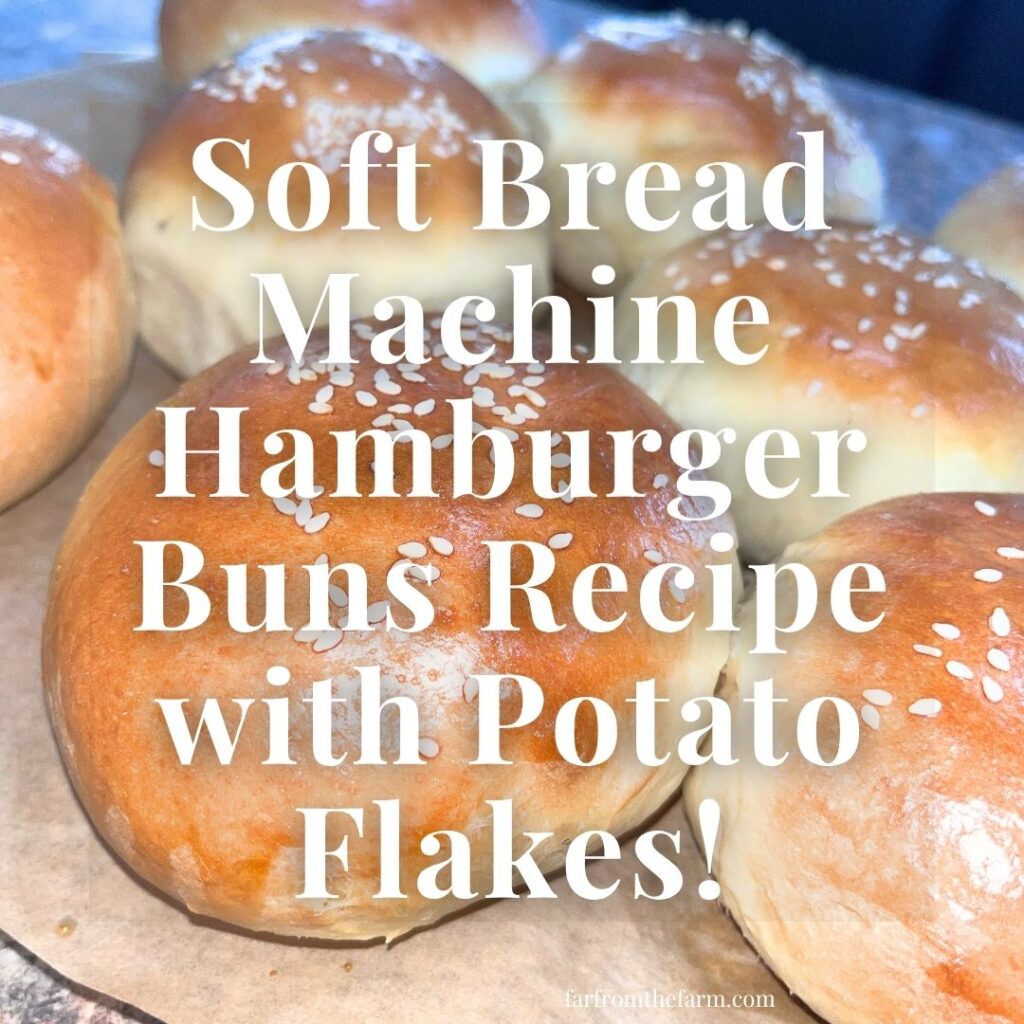
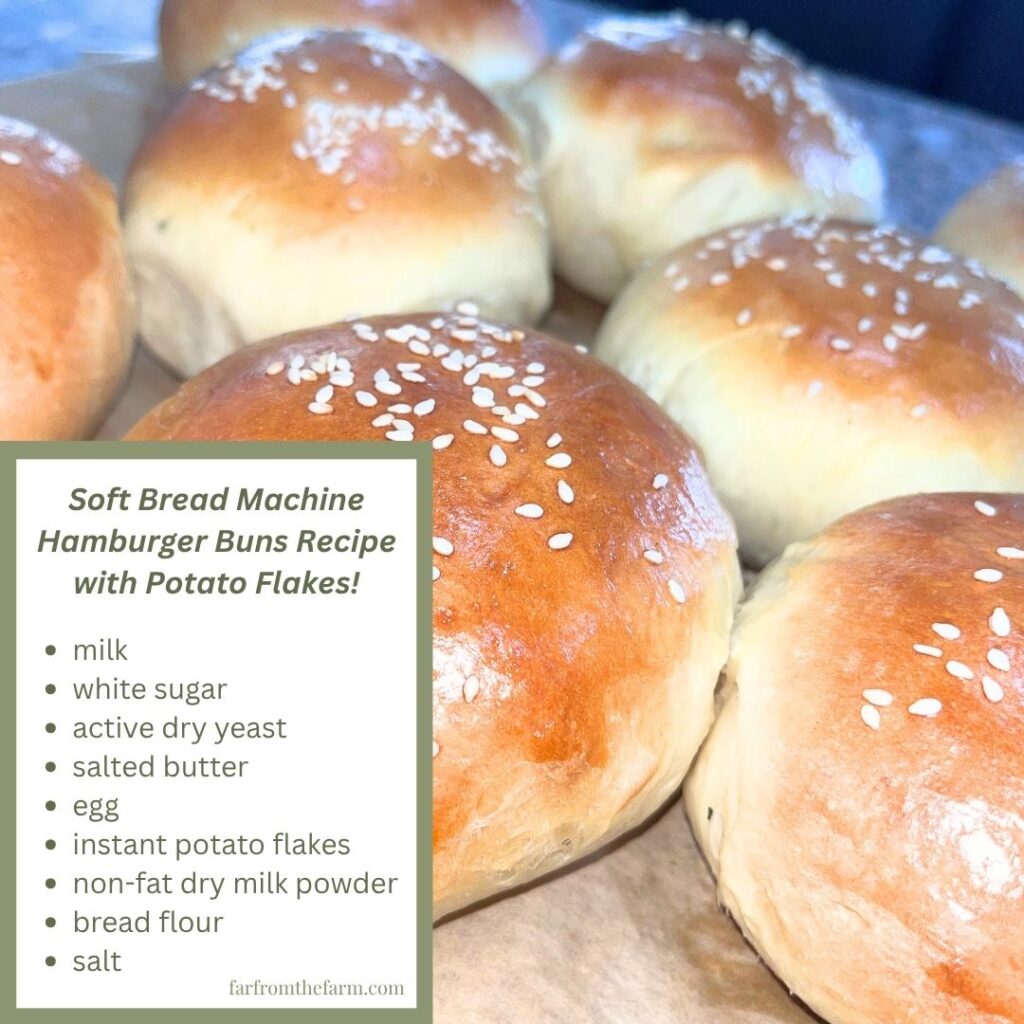
Soft homemade bread machine hamburger buns made with instant mashed potato flakes for a tender crumb, tall rounded shape, and beautifully golden finish!
“Potato flakes and dry milk powder are two of my favourite bread-making ingredients. Together they make these hamburger buns wonderfully soft inside while still giving them enough structure for even the messiest burger.” – Mona, Far From The Farm.
Hi! If you’ve been following me for long you’ll already know this, but for those who are new, welcome to Far From The Farm. I’m Mona, the Brit behind the recipes, learning life and food in the States while sharing our debt-free journey and what’s on the menu in our home today!
If you’re looking for a really lovely homemade hamburger bun that your bread machine does most of the hard work for, you’re in the right place.
These soft bread machine hamburger buns use instant mashed potato flakes and non-fat dry milk powder to create a beautifully tender crumb that stays soft for longer. They bake up with gorgeous golden tops, a light fluffy interior, and just enough structure to hold everything from juicy burgers to pulled pork sandwiches without falling apart.
My bread machine takes care of all the mixing, kneading and first rise, leaving me with a dough that’s incredibly easy to shape before one final rise and a quick bake in the oven. It turns what could feel like a big baking project into something that’s genuinely achievable, even on busy weekdays.
I already have a brioche hamburger bun recipe here on Far From The Farm, but these are quite different. Brioche is richer and more buttery, while these have a lighter everyday texture that makes them incredibly versatile.
They’re perfect for hamburgers, cheeseburgers, BBQ pulled pork, shredded chicken, sloppy joes, deli sandwiches, or simply sliced and served alongside a bowl of homemade soup.
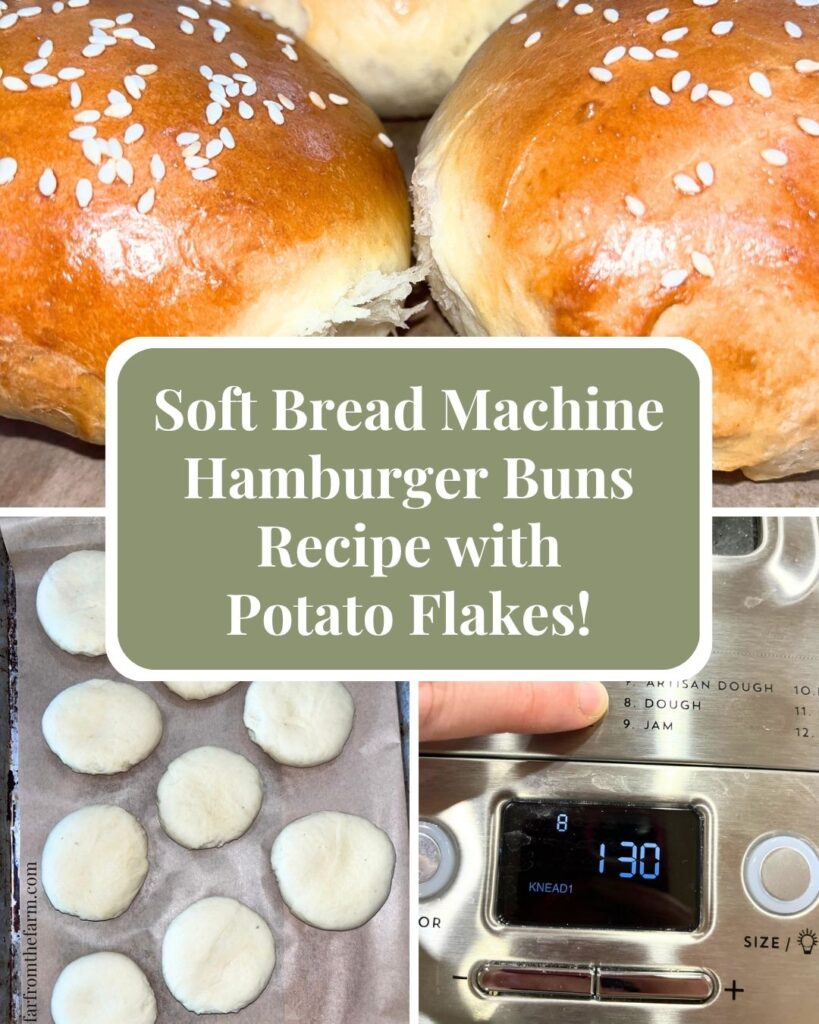
The instant mashed potato flakes are one of my favourite little bread-making ingredients. They don’t make the buns taste like potatoes at all. Instead, they help the dough retain moisture, creating a softer crumb that stays fresher for longer.
Combined with the non fat dry milk powder, they produce wonderfully tender homemade buns using simple supermarket ingredients.
One thing I especially love about this recipe is that it freezes beautifully. I often make a full batch, freeze the extras, and pull them out whenever we’re having burger night or need an easy lunch during the week.
It also fits perfectly with where we are financially. As a military family working through Baby Step 2 of our debt-free journey, we’re making more and more food from scratch.
A batch of homemade hamburger buns costs a fraction of buying bakery buns every week, and once you already have the bread machine sitting on the counter, it’s amazing how little hands-on work is actually involved.
And just a reminder that if you’re struggling and you need help with managing your budget or starting your own debt free journey then here’s some FREE resources below you may find helpful!
living frugally and fully
free tips and resources to make the most of what you have
As always, these photographs are from my real kitchen here in our little military base home. No AI recipe images, no professional studio and no spotless marble counters. Just real food, tested properly and made with the same equipment most home cooks are using.
So if you’re looking for a dependable bread machine hamburger bun recipe with a wonderfully soft crumb, beautifully golden tops, and the extra tenderness that potato flakes bring, this is definitely one to save!
Recipe Disclaimer
All Far From The Farm recipes are shared as a guide based on what works in my home kitchen. Results may vary depending on your ingredients, equipment, and cooking setup, so always use your own judgement. Please check all ingredients for allergies, intolerances, or dietary needs before making any recipe. Far From The Farm is not responsible for any reactions or outcomes from the use of these recipes. Nutritional information is an estimate only.
Mona – Far From The Farm
Why You’ll Love Using a Bread Machine In Your Kitchen!
If you’re new here, you’ll quickly learn that I am such a fan of using a bread machine for dough. It has been one of the biggest helps in my kitchen, especially during busy or overwhelming seasons.
My parents gifted me this little Compact Cuisinart Bread Machine recently when I moved from the UK to the States after getting married, and it has worked like a little powerhouse ever since!

It kneads beautifully. It rises dough evenly. It keeps everything contained in one pan so I am not dealing with flour across every surface of the kitchen.
And on days where the house feels chaotic or I am juggling too much, I can add the ingredients, press the dough button, and let it get on with the work while I focus on everything else.
It takes away so much of the guesswork and makes homemade bread, pizza dough, cinnamon rolls, soft rolls, and sweet bakes feel much simpler.
It has also been a real blessing for our budget. Homemade dough costs pennies compared to store prepared versions and certainly compared to eating out. As a military family on baby step 2 of our debt free journey, little savings like that matter across an entire month.
Check out The Bread Machine Academy today!
Learn bread machine baking with beginner-friendly guides on flour, yeast, ingredients, troubleshooting, dough cycles, tips, and techniques!
If you have ever felt intimidated by bread making, this is your gentle nudge to give it a try. A dough cycle handles all the kneading for you.
You get soft, reliable, fluffy dough without standing over a counter for ages or worrying if things rose the way they should. It makes homemade cooking feel doable, even on days that are far from calm.
Browse Bread Machine Recipe Type
There are so many beginner friendly ideas to help you feel confident and excited about homemade dough – join the Facebook group today and share recipes and tips for perfect bread, every time!
Join our new Facebook Group!
THE BEST BREAD STARTS WITH THE RIGHT COMMUNITY…
Beginner-Friendly Bread Machine and Bread Recipes is our new Facebook group for home bakers who want bread baking to feel simple, doable, and encouraging.

Equipment
- Bread machine (with a Dough cycle)
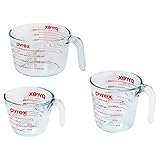
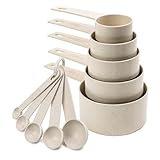
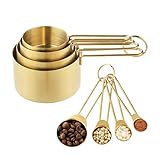
- Measuring jug, cups and spoons
- Spoon or silicone spatula
- Large baking sheet
- Parchment paper
- Pastry brush (for the optional egg wash)
- Cooling rack
- Kitchen / hand towel
Available on Amazon.com [ad]


Ingredients
Makes 8 to 10 hamburger buns
- 1 1/4 cups warm milk
- 3 tbsp white sugar
- 2 1/4 tsp active dry yeast
- 4 tbsp salted butter, cold and cut into small cubes
- 1 large egg
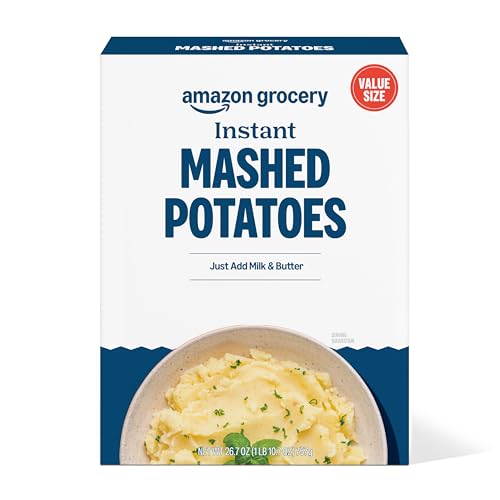
- 1/3 cup instant mashed potato flakes
- 2 tbsp non-fat dry milk powder
- 3 3/4 cups bread flour
- 1 1/2 tsp table salt
Optional:
- 1 egg beaten with 1 tbsp water (egg wash)
- Sesame seeds
Available on Amazon.com [ad]

Step-by-Step Instructions
Step One: Activate the yeast
Remove the bread pan from your bread machine and place it on the worktop before adding any ingredients. This makes measuring easier and helps prevent flour or liquids spilling inside the machine.
Pour in the warm milk, add the sugar and stir briefly to dissolve it.
Add in the yeast and stir again.
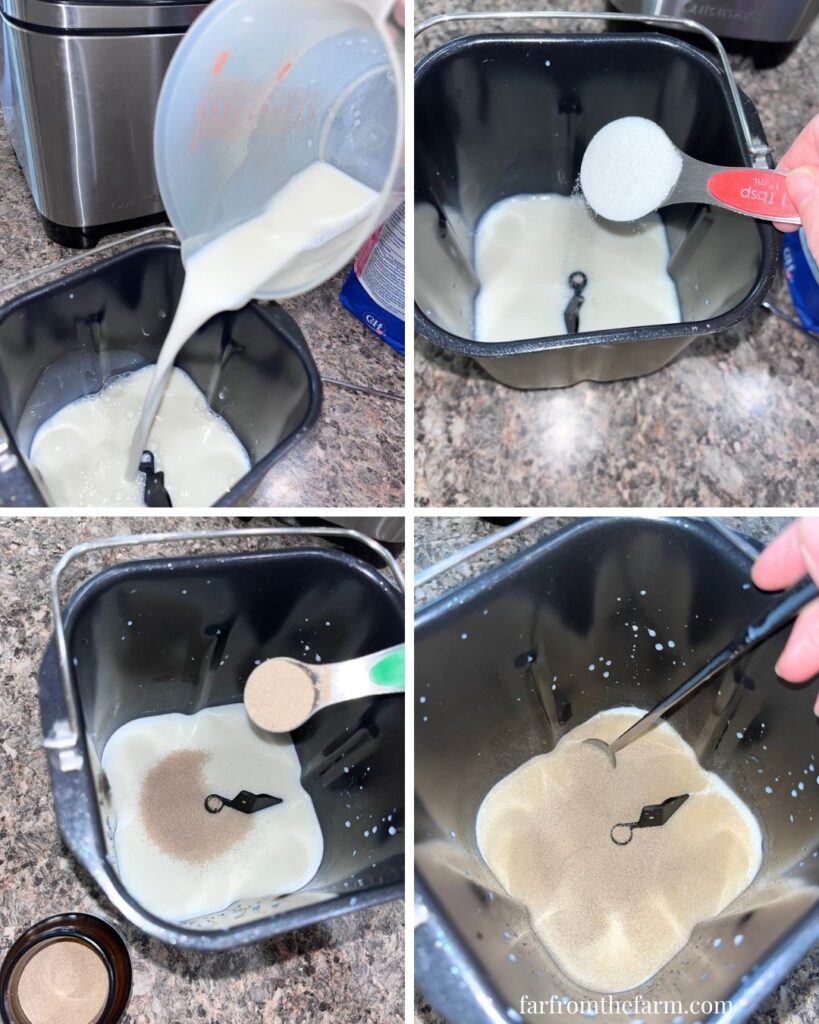
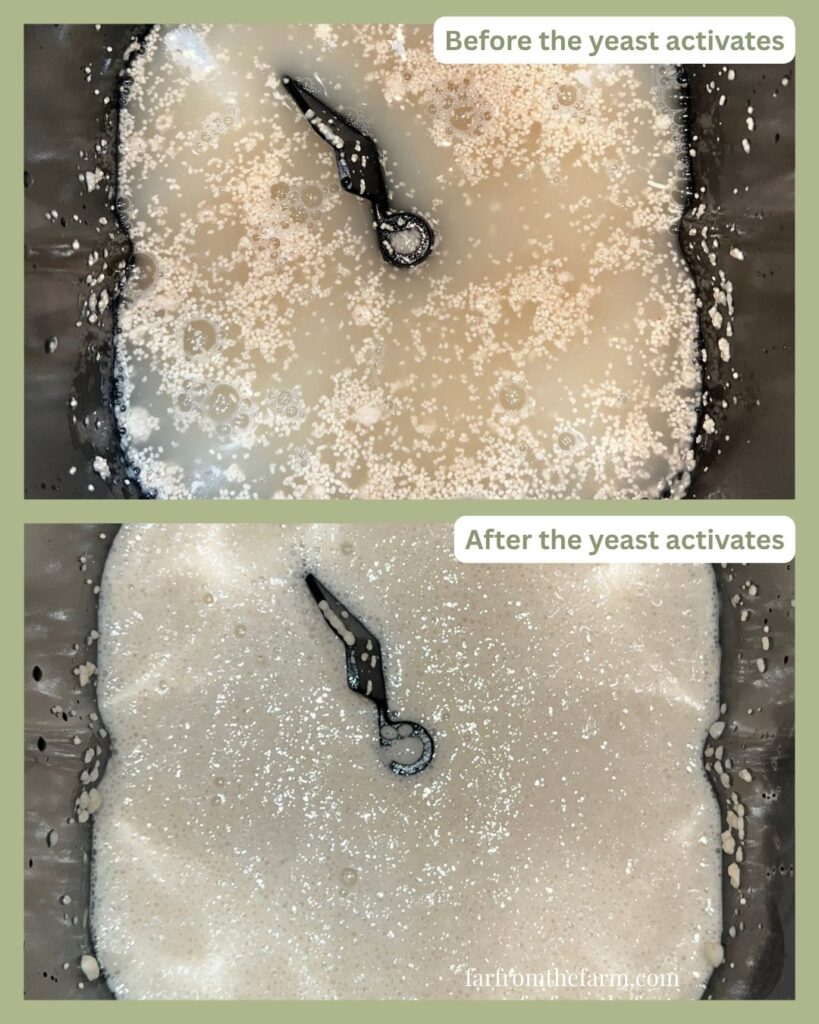
Cover the pan with plastic wrap or a clean towel, and let it rest for 5 to 10 minutes until it looks bubbly and frothy. That’s how you know the yeast is alive and ready to go.
Here’s the part no bread machine manual ever seems to tell you. If the yeast doesn’t bloom here, don’t keep going. I’ve had to throw out whole loaves before because the yeast was bad, and you won’t find out until it’s baked if you add it last like most manuals say.
Taking five minutes now saves three wasted hours later!
Check the images below to see the kind of change you should see after the yeast has activated:
Step Two: Add the remaining ingredients
Once the yeast has activated, add the cold cubed butter and the egg directly into the bread pan.
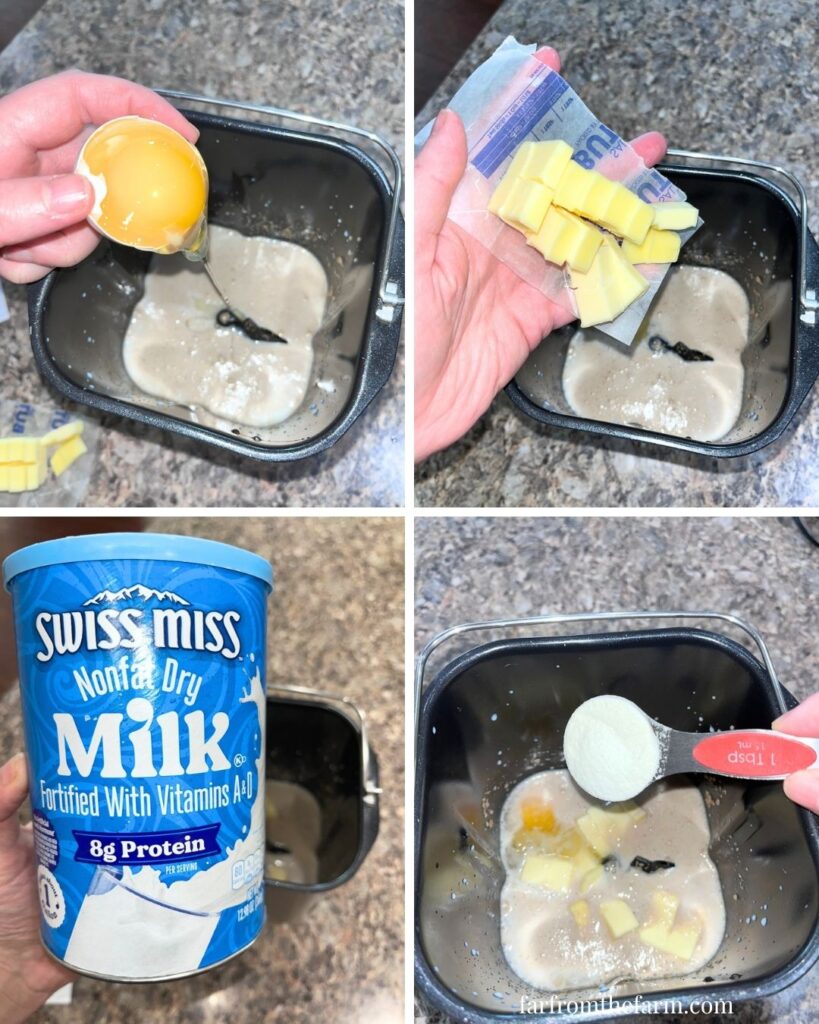
Next, add the instant mashed potato flakes, non-fat dry milk powder and the bread flour. There is no need to stir anything together. The bread machine will take care of that for you.
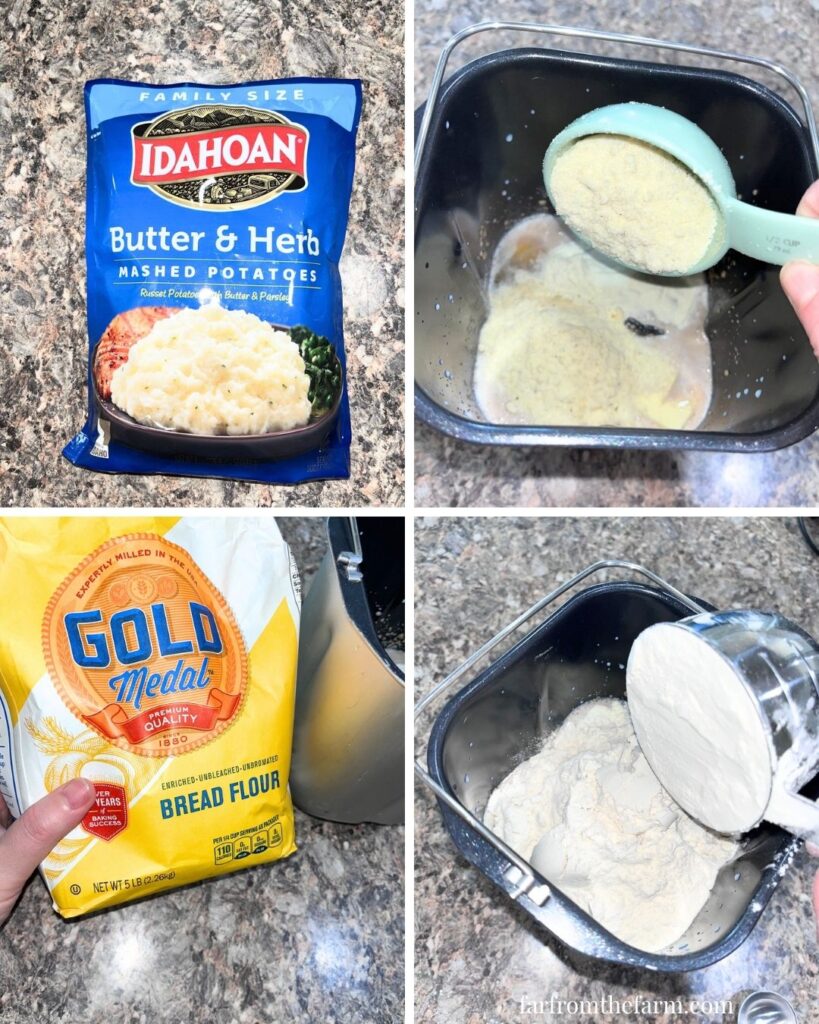
Finally, make a small well in the top of the flour and add the salt into it. Cover the salt with a little of the surrounding flour so it doesn’t come into direct contact with the activated yeast straight away.
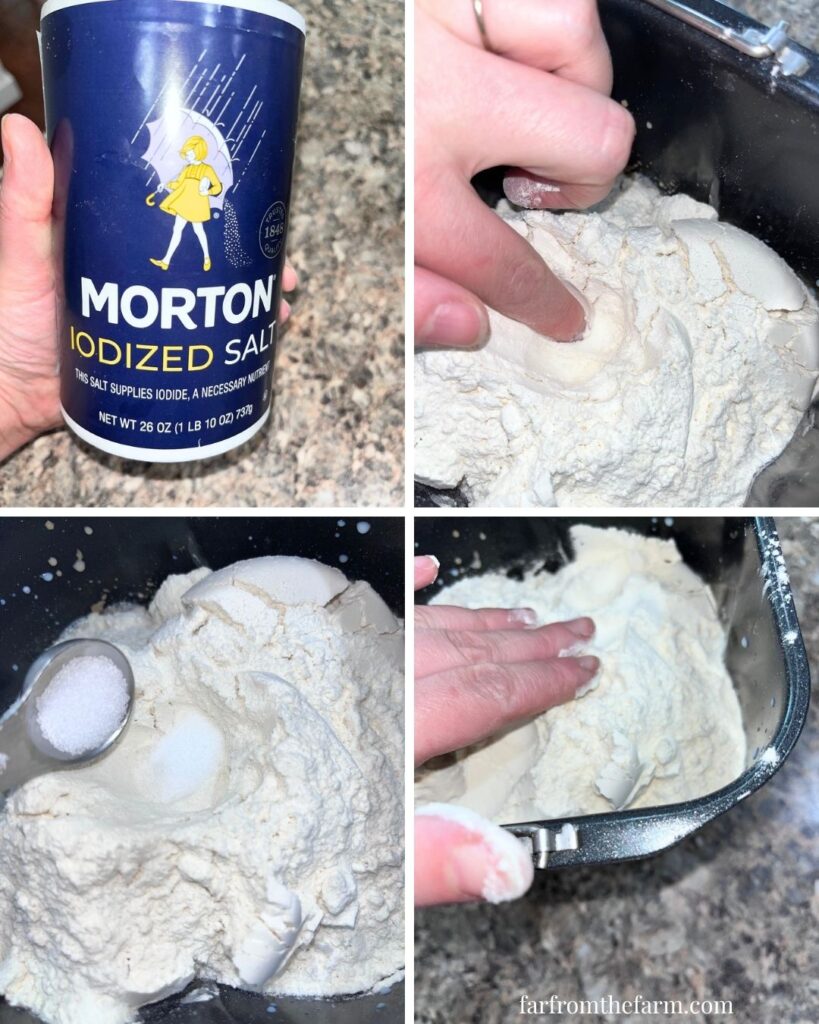
Step Three: Start the Dough cycle
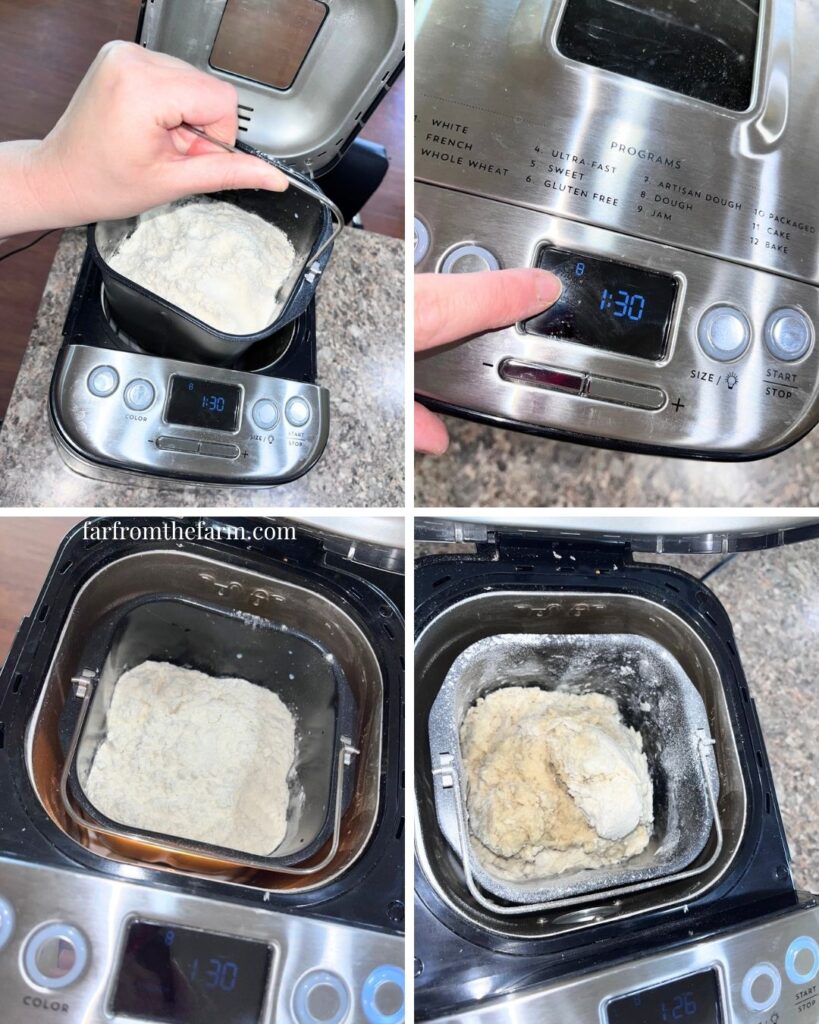
Return the bread pan to the bread machine and lock it into place.
Select the Dough programme and press Start.
On most bread machines this cycle takes around 90 minutes, although yours may be a little shorter or longer depending on the model.
During this time the machine will mix, knead and complete the first rise for you.
Step Four: Allow the Dough cycle to finish
Close the lid and let the bread machine complete the entire Dough cycle without interruption.
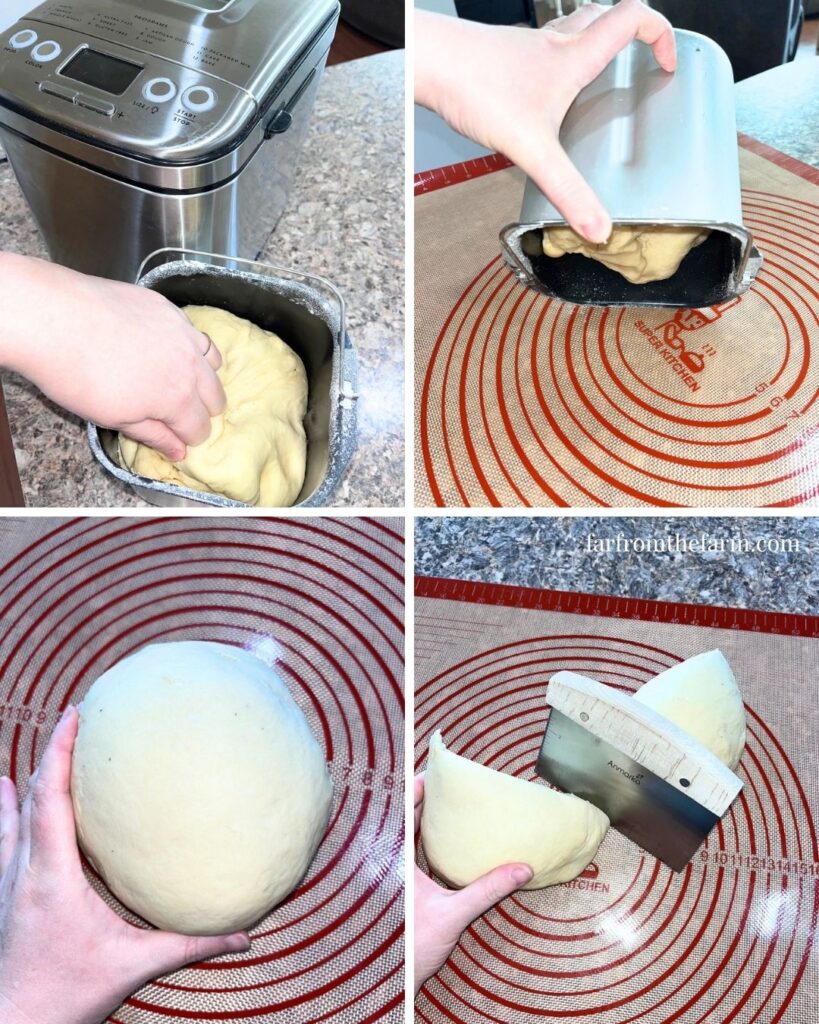
By the time it finishes, the dough should have doubled in size and feel soft, smooth and slightly puffy when gently pressed.
Step Five: Divide and shape the buns
Tip the dough onto a very lightly floured work surface.
Resist the temptation to add lots of extra flour here. The softer you can keep the dough, the softer your finished buns will be.
Gently press the dough down to remove any large air bubbles, then divide it into 8 large or 10 slightly smaller equal portions.
Roll each piece into a smooth, tight ball by pulling the edges underneath until the top feels taut.
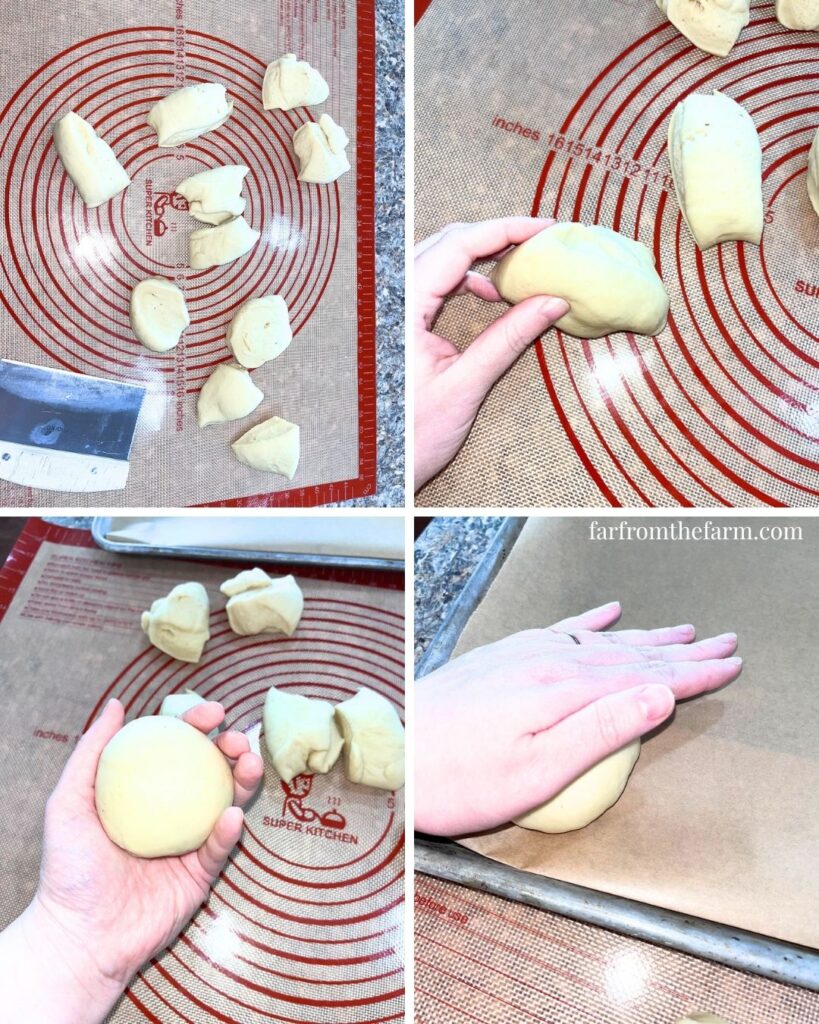
Place the buns onto a parchment-lined baking tray, leaving plenty of room between them for the final rise.
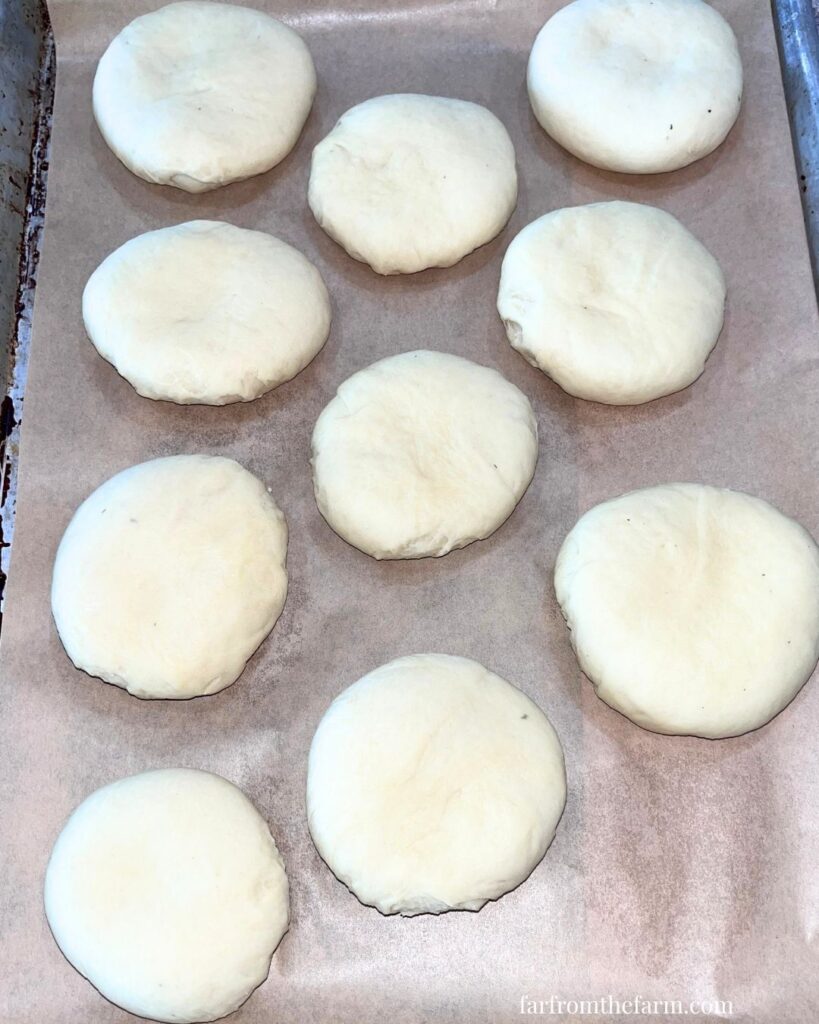
Gentle flatten each dough ball down by gently pressing down on them with the palm of your hand.
Step Six: The final rise
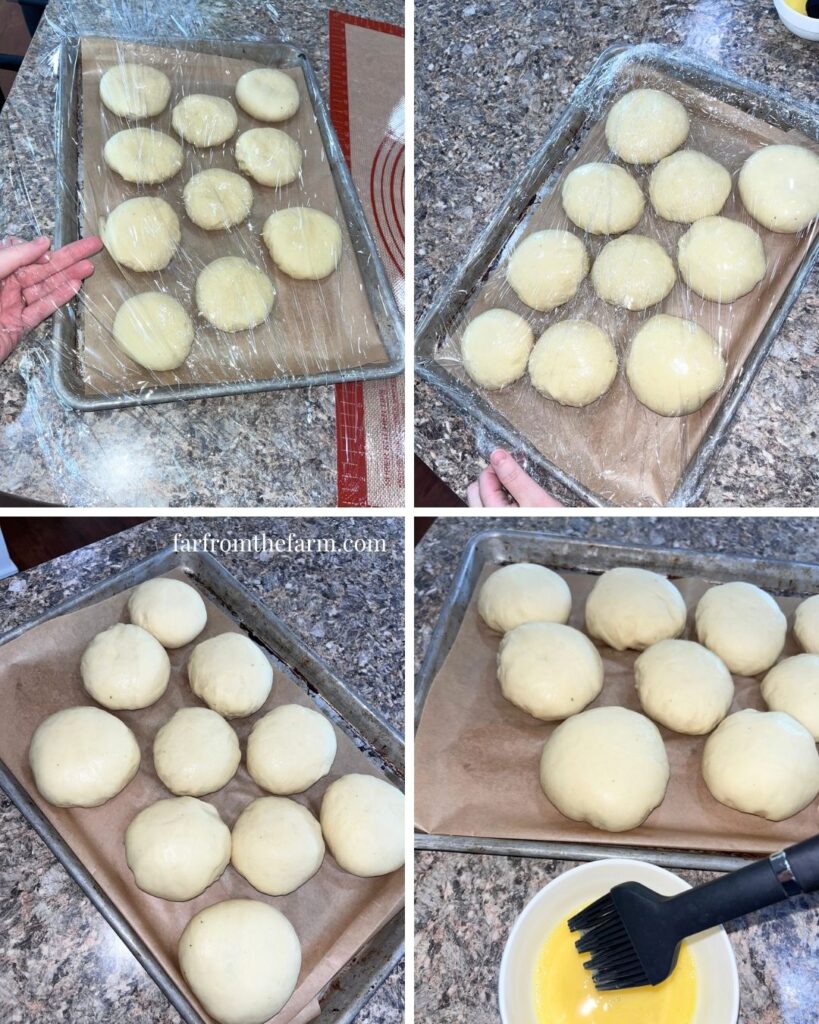
Cover the tray loosely with a clean kitchen towel or lightly greased plastic wrap.
Leave the buns to rise in a warm place for about 1 hour, or until they’ve noticeably increased in size and look soft and puffy.
They don’t need to double exactly, but they should look well risen before they go into the oven.
Step Seven: Add the egg wash
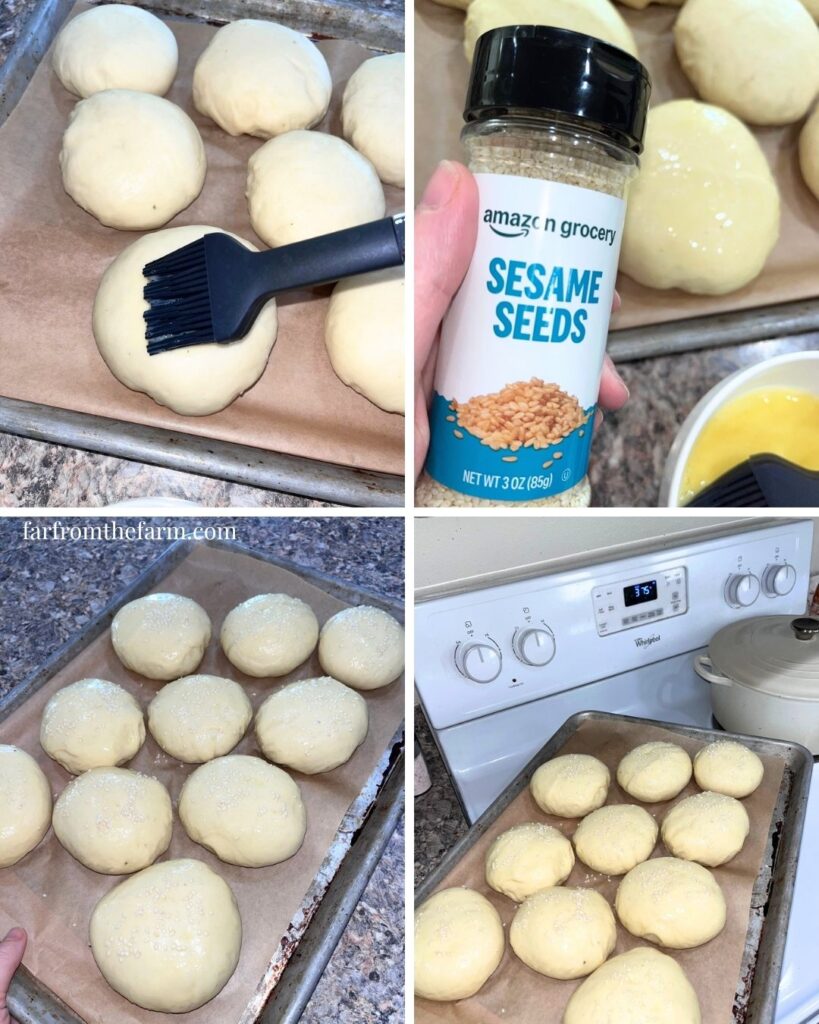
Preheat your oven to 375°F (190°C).
If you’d like shiny golden burger buns, gently brush the tops with the beaten egg wash.
If you’re using sesame seeds, sprinkle them over the tops immediately after brushing with the egg wash so they stick well.
Step Eight: Bake
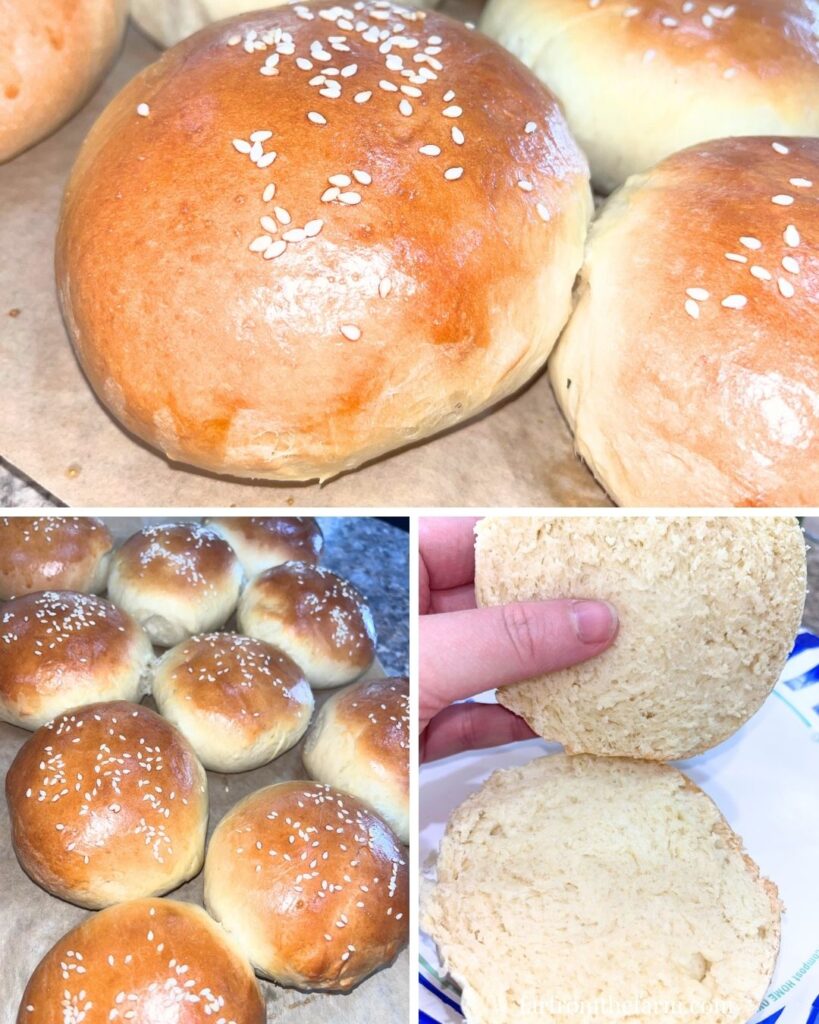
Bake the buns for 15 to 18 minutes, or until they’re evenly golden brown across the tops.
They should feel light for their size and sound slightly hollow when tapped underneath.
Try not to overbake them, as that’s one of the quickest ways to lose the lovely soft texture you’re aiming for.
Step Nine: Cool and keep them soft
Transfer the buns to a cooling rack as soon as they come out of the oven.
While they’re still warm, cover them loosely with a clean kitchen towel.
This traps just enough steam to soften the crust without making the buns soggy, helping the buns stay beautifully soft while they finish cooling.
Allow them to cool before slicing, or enjoy one warm with a little butter while the rest are cooling.
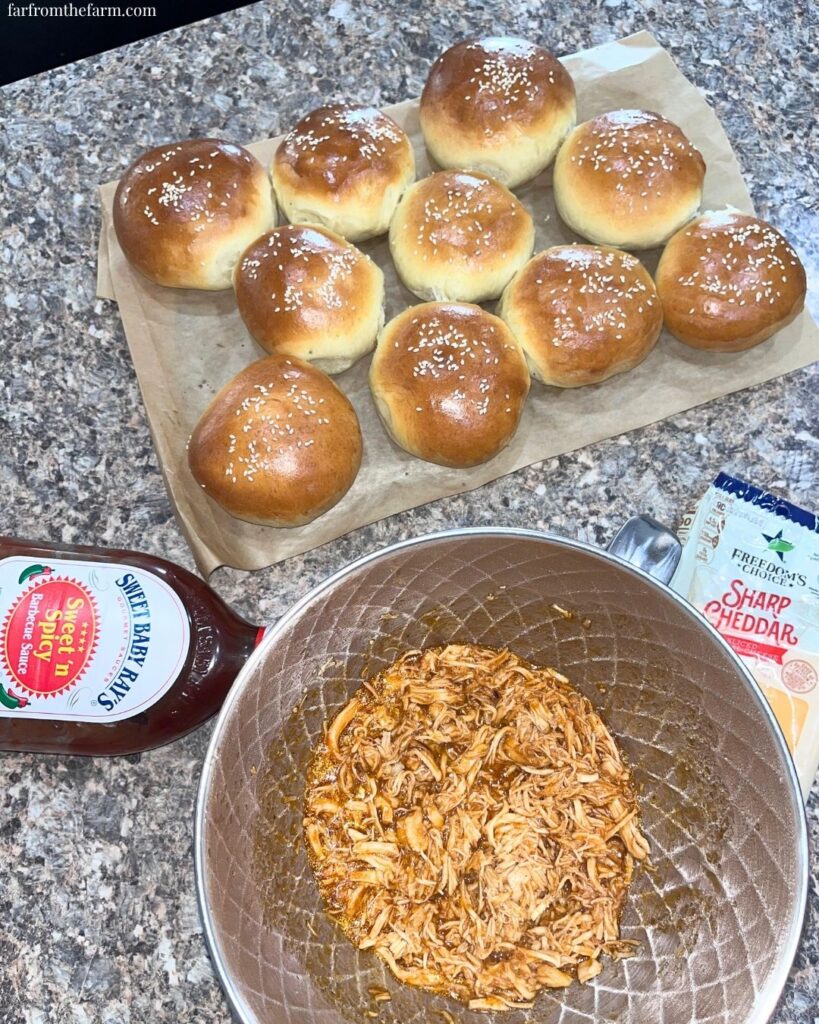
Notes
- This recipe makes 8 large burger buns or 10 slightly smaller buns, depending on how you divide the dough.
- Instant mashed potato flakes are one of the key ingredients that give these buns their wonderfully soft texture. Don’t skip them if you can avoid it, as they help the buns stay softer for longer.
- I use non-fat dry milk powder as well as fresh milk because it adds extra richness and tenderness without making the dough heavy.
- You’ll notice I tell you to add cold butter that’s been cut into small cubes. One of the things I love about using a bread machine is that I rarely have to remember to soften butter ahead of time. My little Cuisinart handles cold cubed butter beautifully during the Dough cycle, making homemade baking much more convenient on busy days.
- Resist adding lots of extra flour while shaping. This dough is naturally softer than many bread doughs, and that’s exactly what gives these buns their light, fluffy crumb.
- For the most evenly sized buns, weigh each portion of dough before shaping so they bake at the same rate.
- Bake the buns just until they’re beautifully golden. Overbaking is one of the quickest ways to dry them out and lose that lovely soft interior.
Troubleshooting
My dough seems very soft
That’s perfectly normal.
This is an enriched dough made with milk, butter, egg and potato flakes, so it won’t feel as firm as a basic white bread dough. Only add extra flour if the dough isn’t forming into a ball after several minutes of kneading.
My buns spread instead of rising upwards
The dough may have been slightly over-proofed or shaped a little too loosely.
Try creating more surface tension when rolling each piece into a ball, and don’t leave them for much longer than an hour during the second rise unless your kitchen is particularly cool.
My buns are dry
The most common cause is incorporating too much extra flour during shaping.
Keep the work surface only lightly floured and remember that this dough should stay soft all the way through the process.
Overbaking can also dry them out, so start checking them around the 15-minute mark.
My buns didn’t rise very much
Check that your yeast became foamy before you started the recipe.
Inactive yeast is the most common cause of poor rise. Also make sure your milk was warm rather than hot, as overly hot milk can damage the yeast.
My sesame seeds fell off
Brush the egg wash over the buns immediately before sprinkling on the sesame seeds and press them very gently into the surface with your fingertips if needed. They’ll adhere much better once the buns begin baking.
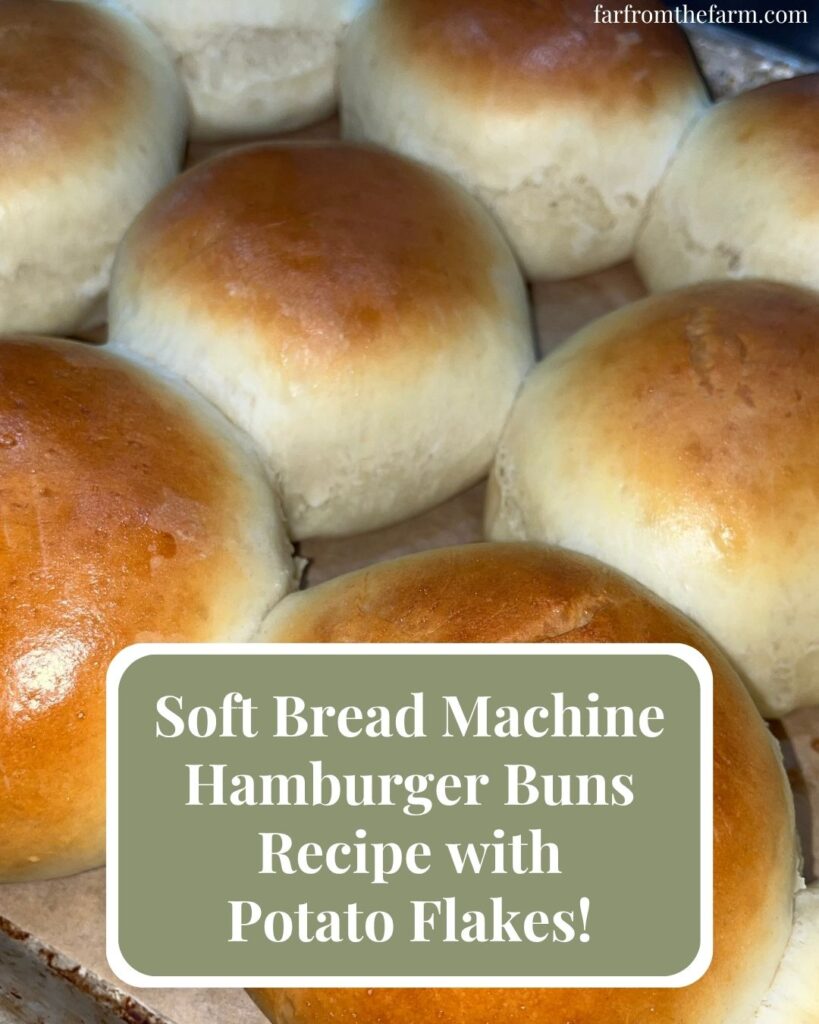
Storage
- Store completely cooled buns in an airtight container or bread bag at room temperature for up to 3 days.
- For longer storage, freeze the cooled buns in a freezer-safe bag for up to 3 months. I like to slice them before freezing so they’re ready to go straight onto the grill, into the toaster or onto the counter to thaw.
- If you’d prefer to prepare ahead even earlier, the dough itself also freezes beautifully after the Dough cycle. Have a look at my How and When to Freeze Bread Machine Dough guide in The Bread Machine Academy for a full step-by-step tutorial.
Serving Ideas
These homemade bread machine hamburger buns are delicious with so much more than burgers. Try them with:
- Classic hamburgers or cheeseburgers
- Bacon burgers
- BBQ pulled pork sandwiches
- Shredded BBQ chicken sandwiches
- Sloppy Joes
- Crispy chicken burgers
- Fried fish sandwiches
- Pulled beef sandwiches
- Deli meat and cheese sandwiches
- Warm with butter alongside a bowl of homemade soup
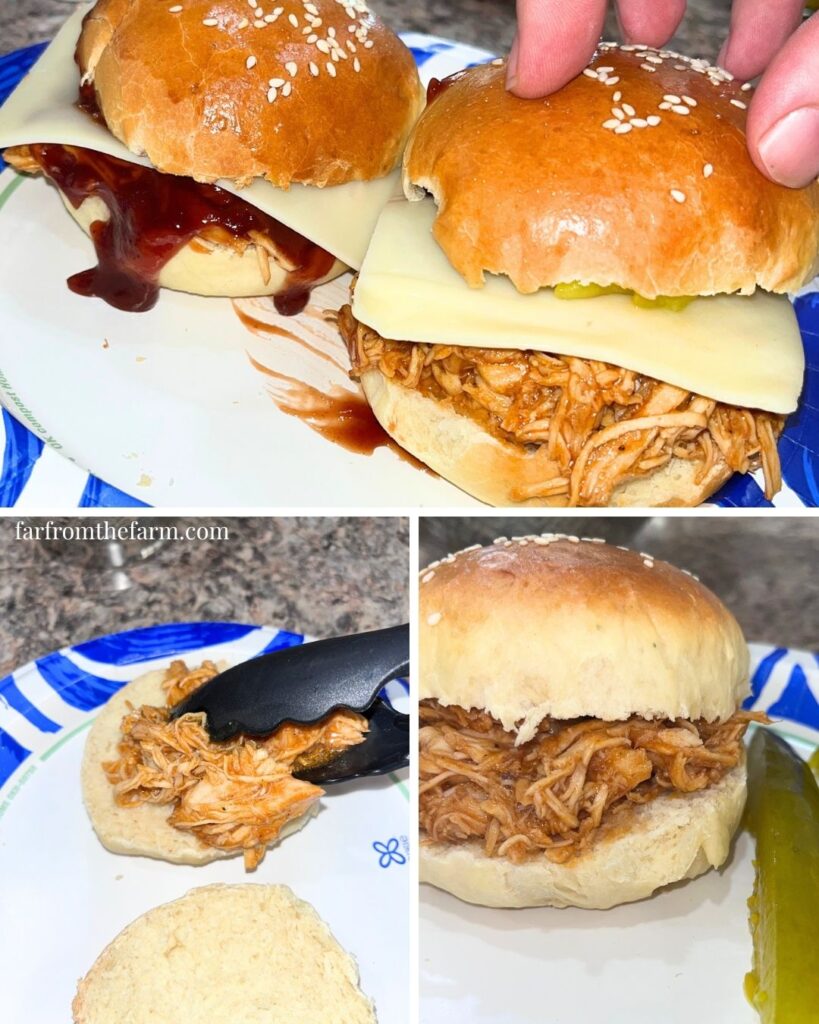
Why You’ll Love This Recipe?!
- Soft, tender crumb thanks to instant mashed potato flakes
- Made almost entirely by your bread machine
- Easy enough for beginner bread machine bakers
- Uses simple supermarket ingredients
- No need to soften the butter first
- Perfect for burgers, BBQ sandwiches, pulled pork and sandwiches
- Freezes beautifully for future meals
- Makes 8 to 10 generous hamburger buns
- Stays soft for longer with potato flakes and dry milk powder
FAQ
Yes. This recipe was actually developed using active dry yeast, which is why I bloom it in the warm milk first. If you prefer using bread machine yeast or instant yeast, you can usually add it directly with the dry ingredients instead.
Instant potato flakes help the dough retain moisture, producing a softer crumb that stays fresh for longer. You won’t taste potato in the finished buns, but you’ll definitely notice how light and pillowy they are.
Absolutely. Allow the buns to cool completely, then freeze them in a freezer-safe bag or container for up to three months. Thaw at room temperature, or warm them gently in the oven before serving.
Yes. After the Dough cycle finishes, you can freeze the dough ready to shape and bake later. If you’d like a full walkthrough, have a look at my guide to How and When to Freeze Bread Machine Dough in The Bread Machine Academy.
Of course. The sesame seeds are completely optional and don’t affect the texture of the buns. They bake up beautifully with or without them.
Yes. Simply divide the dough into 12 to 16 smaller portions instead of 8 to 10. Keep an eye on them while baking, as they’ll usually need a few minutes less in the oven.
Soft Bread Machine Hamburger Buns Recipe with Potato Flakes!

Ingredients
Equipment
Method
- Remove the bread pan from the bread machine and add the warm milk and sugar. Stir to dissolve the sugar, add the yeast, stir again, cover and leave for 5 to 10 minutes until foamy.
- Add the cubed butter and egg.
- Add the instant mashed potato flakes, non-fat dry milk powder and bread flour.
- Make a small well in the flour, add the salt, then cover it with a little flour.
- Return the pan to the bread machine and select the Dough cycle.
- Allow the Dough cycle to complete.
- Turn the dough onto a lightly floured work surface, gently knock it back and divide into 8 large or 10 smaller portions. Shape into smooth balls and place on a parchment-lined baking tray.
- Gentle flatten each dough ball down by gently pressing down on them with the palm of your hand.
- Cover and allow to rise for about 1 hour until noticeably puffy.
- Preheat the oven to 375°F (190°C).
- Brush with egg wash if using and sprinkle with sesame seeds.
- Bake for 15 to 18 minutes until golden brown.
- Transfer to a cooling rack and cover loosely with a clean kitchen towel while cooling to help keep the buns soft.
Notes
- This recipe makes 8 large hamburger buns or 10 slightly smaller buns, depending on how you divide the dough.
- Instant mashed potato flakes help create a wonderfully soft crumb and keep the buns fresher for longer.
- Non-fat dry milk powder adds tenderness and richness without making the dough heavy.
- I use cold butter cut into small cubes straight from the refrigerator. My bread machine incorporates it perfectly during the Dough cycle, so there’s no need to remember to soften it first.
- This dough should feel softer than a standard white bread dough. Resist adding unnecessary extra flour, especially while shaping.
- For the most evenly sized buns, weigh each portion of dough before shaping so they bake at the same rate.
- Bake the buns just until they’re beautifully golden. Overbaking is one of the quickest ways to dry them out and lose that lovely soft interior.
Storage
- Store completely cooled buns in an airtight container or bread bag at room temperature for up to 3 days.
- For longer storage, freeze the cooled buns in a freezer-safe bag for up to 3 months. I like to slice them before freezing so they’re ready to go straight onto the grill, into the toaster, or onto the counter to thaw.
- If you’d prefer to prepare ahead even earlier, the dough itself also freezes beautifully after the Dough cycle. See my How and When to Freeze Bread Machine Dough guide in The Bread Machine Academy for a full step-by-step tutorial.
Related Recipes
- All Dough Cycle Recipes
- Easy Bread Machine Brioche Hamburger Buns
- All Bread Machine Burger Buns and Hot Dog Buns
Nutrition information is automatically calculated, so should only be used as an approximation.
Looking for more homemaking inspiration?

It’s so important to be part of a community that not only understands you but that champions you, encourages, challenges and cheers you on. We couldn’t find one – so we created it instead!
Join the Side Hustle Homemakers Team Julie, Sam and I over at the Recipes, Homesteading and More! Facebook Group for Food Blogging Tips, Homesteading and Homemaking content and encouragement!
We’re 3 very different US/UK military families who met and became instant forever friends. We share what’s working in our kitchens, gardens, homes and more!
We created the group to share real life around recipes, homesteading, homemaking and more. Head on over, say Hi, share you tips and gain some friends and knowledge along the way!
The Takeaway
These bread machine hamburger buns are soft, flavorful, and made with simple ingredients you can find in almost any supermarket.
The instant mashed potato flakes and non-fat dry milk powder help create a wonderfully tender crumb, while the bread machine does almost all of the hard work for you. They’re perfect for hamburgers, pulled pork, BBQ chicken, sloppy joes, deli sandwiches, and they freeze beautifully for busy days ahead.
If you’re looking for an easy, dependable homemade hamburger bun recipe that you’ll come back to again and again, this is one well worth keeping in your recipe collection!
What To Try Next?!

Share & Rate This Recipe!
If you give these bread machine hamburger buns a try, don’t forget to leave a star rating and a quick comment below. I always enjoy hearing how these recipes turn out in your kitchen!
Last update on 2026-10-27 / Affiliate links / Images from Amazon Product Advertising API


One Comment