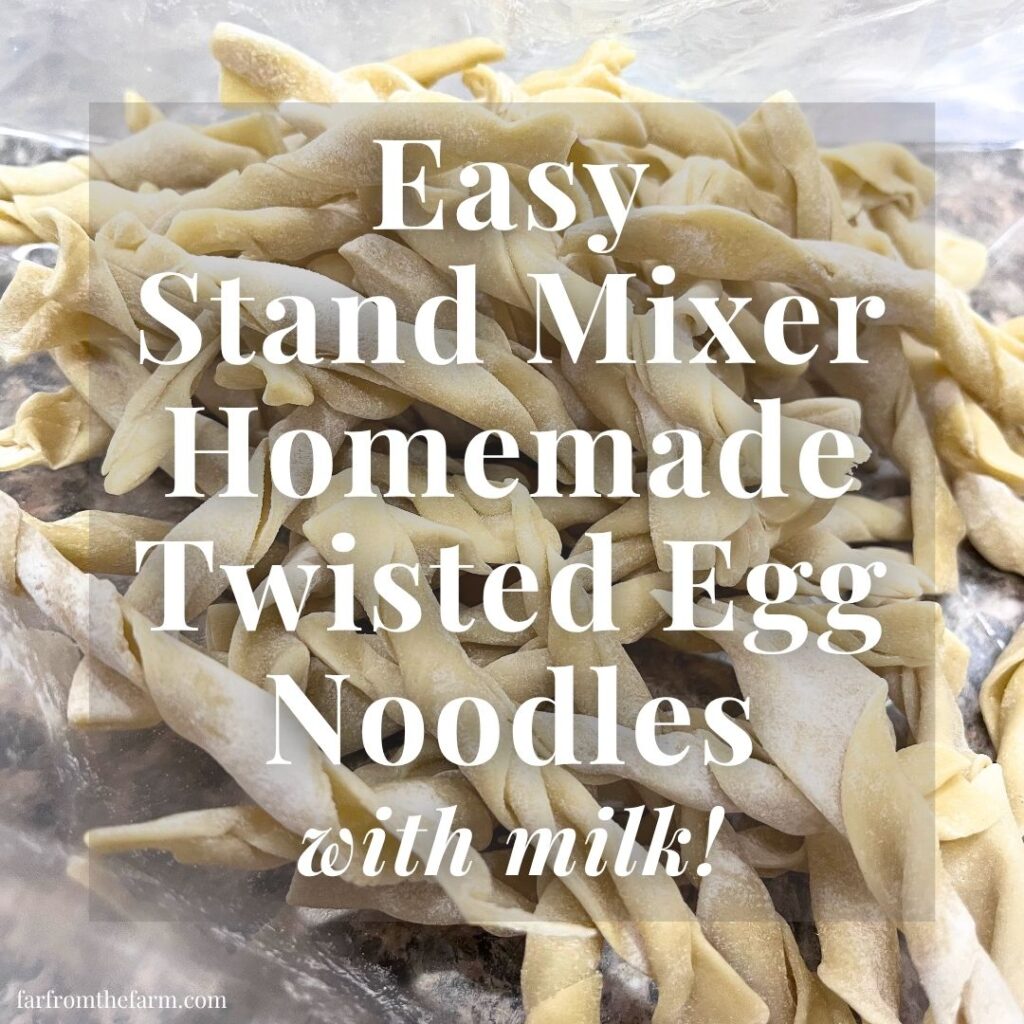
Soft & Tender Old-Fashioned Twisted Egg Noodles Made from Scratch!
Learn how to make the best homemade twisted egg noodles with milk using your KitchenAid stand mixer. This easy, 4-ingredient recipe creates soft, velvet-like noodle dough that rolls out perfectly every time. These rustic, tender noodles are the ultimate comfort food base for Swedish meatballs, hearty chicken and noodles, cozy winter soups, and rich beef gravies!
“Skip the grocery store bags! This is the ultimate recipe for tender homemade egg and milk noodles made effortlessly in a stand mixer. With just four pantry staples, you get rustic, flavorful noodles that taste lightyears better than store-bought.” – Mona, Far From The Farm.
Hi! If you’ve been following me for long you’ll already know this, but for those who are new, welcome to Far From The Farm. I’m Mona, the Brit behind the recipes, learning life and food in the States while sharing our debt-free journey and what’s on the menu in our home today!
One of our family’s favorite comfort food dinners is Swedish meatballs served over a big bowl of egg noodles. Rich gravy. Tender meatballs. Soft noodles that soak up every drop of sauce. It is one of those meals that always feels cozy and satisfying.
As a Brit I had actually never eaten egg noodles like this until I moved to the United States. They are similar to pasta but definitely their own thing.
Across America you will see them served with rich sauces, creamy gravies, hearty beef dishes, and comfort food classics like Swedish meatballs or chicken and noodles.
We make homemade pasta quite often, but I wanted to create something a touch richer to go perfectly with my creamy meatballs dish. Something softer and a little more comforting. I adapted my egg noodle recipe to add in a little milk and I’ve never looked back!
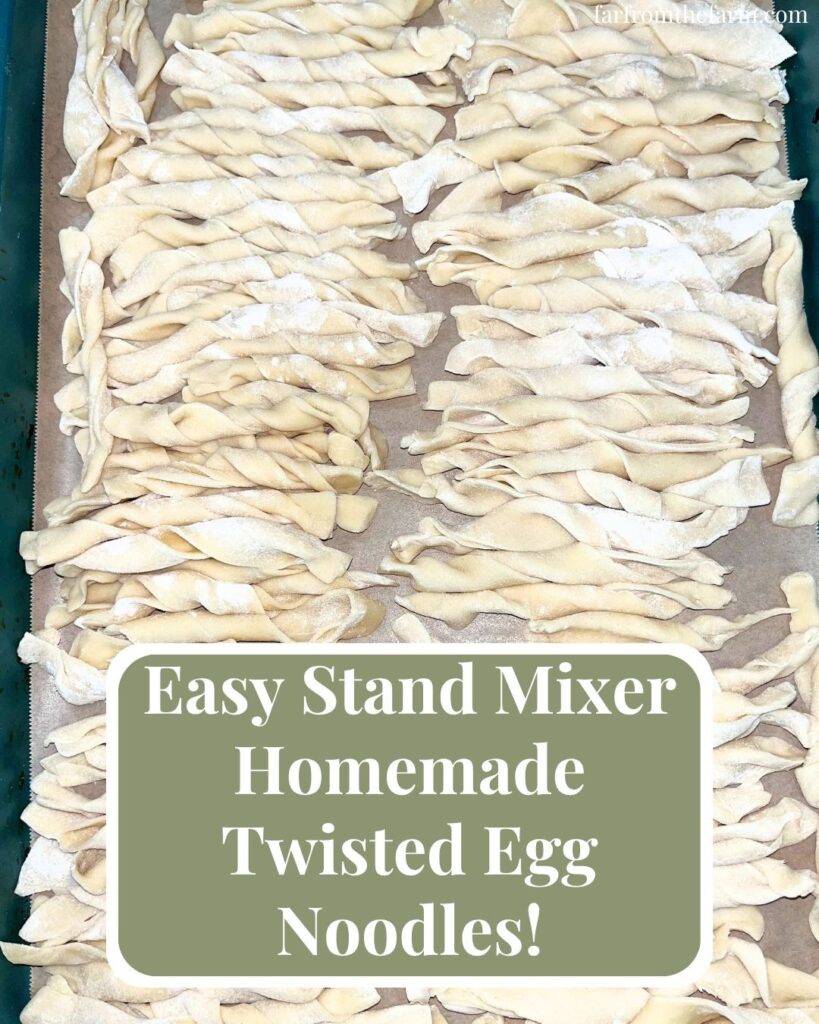
These noodles have an almost velvet-like, smooth consistency. The noodles cook up tender with just the right chew, and I love giving each one a gentle twist before cooking to create that classic rustic egg noodle shape you see in the grocery store!
Once you make them at home you may find yourself reaching for this recipe again and again.
And just a reminder that if you’re struggling and you need help with managing your budget or starting your own debt free journey then here’s some FREE resources below you may find helpful!
living frugally and fully
free tips and resources to make the most of what you have
As always, these photos are from my real kitchen here in our sweet military base home. No AI recipe images or staged lighting or spotless marble counters. Just real life and real food made in a small space. Proof that you can feed your family well without needing a dream kitchen or fancy tools!
So let’s roll up our sleeves and head into the kitchen together to make the best homemade twisted egg and milk noodles you’ll ever try!
Recipe Disclaimer
All Far From The Farm recipes are shared as a guide based on what works in my home kitchen. Results may vary depending on your ingredients, equipment, and cooking setup, so always use your own judgement. Please check all ingredients for allergies, intolerances, or dietary needs before making any recipe. Far From The Farm is not responsible for any reactions or outcomes from the use of these recipes. Nutritional information is an estimate only.
Mona – Far From The Farm
Equipment
- KitchenAid stand mixer with bowl and dough hook
- Measuring jug, cups and spoons
- Plastic wrap
- Cookie sheet
- Rolling pin or KitchenAid pasta roller attachment
- Knife or pizza cutter
- Large pot for boiling noodles
- Colander
Available on Amazon.com [ad]




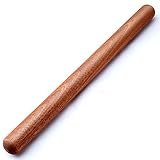


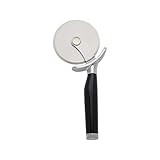


Ingredients
Serves about 4-6 people
- 4 large eggs
- 2 tsp salt
- 1/2 – 1/3 cup milk
- 4 cups all purpose flour
Step By Step Instructions
Step 1: Mix the dough
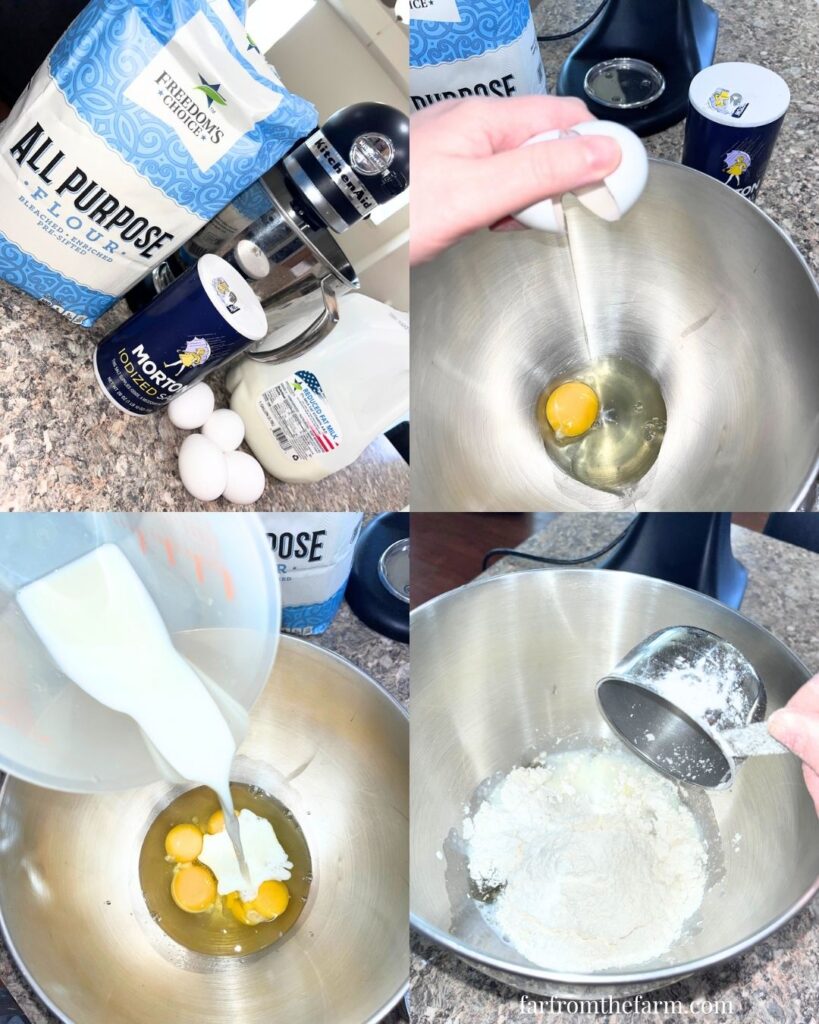
Add the eggs, salt, milk, and flour to the bowl of your KitchenAid stand mixer.
TIP: If you’re planning to roll out by hand I would up the milk to 1/3 cup. This is a stiff dough to work with even with a KitchenAid pasta attachment -having it a little softer is necessary if you’re not using one.
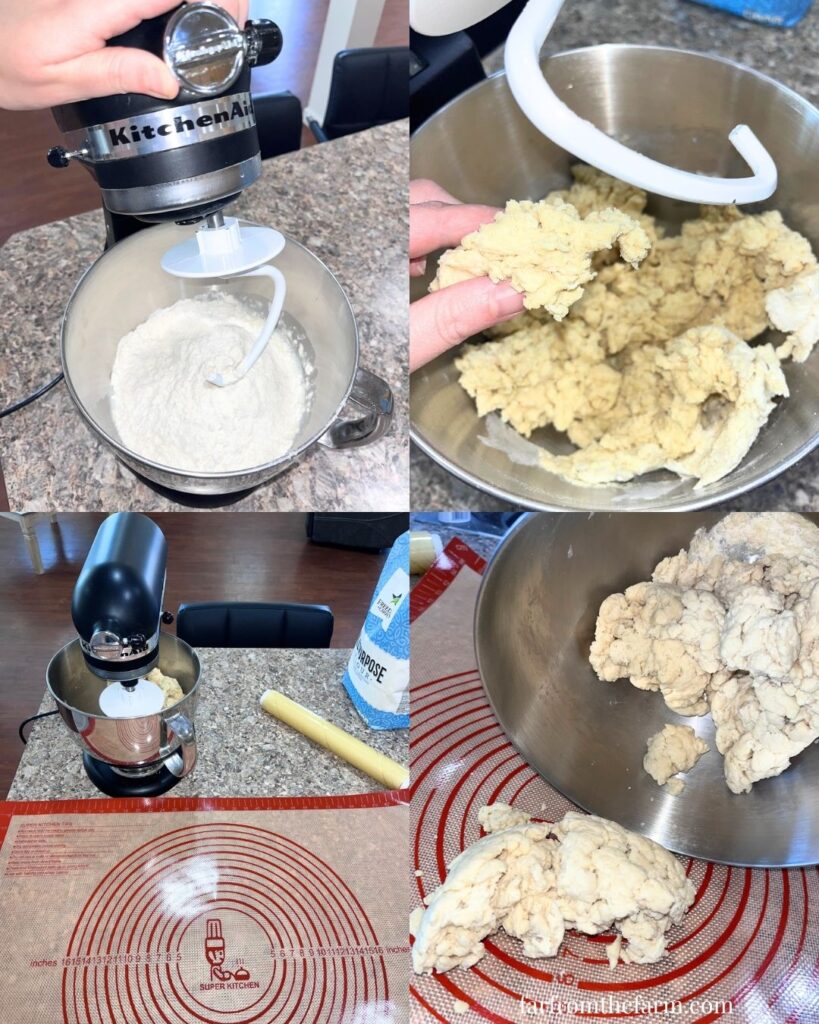
Attach the dough hook and knead on low speed for 5 to 7 minutes. Pause halfway through to scrape down the bowl so everything combines evenly.
The dough will be stiff and slightly dry. That is completely normal for egg noodle dough.
Step 2: Knead briefly by hand
Turn the dough out onto the counter. There is usually no need to flour the surface, but you can if you prefer.
Knead by hand for another 3 to 5 minutes until you can bring the dough together into a rough ball.
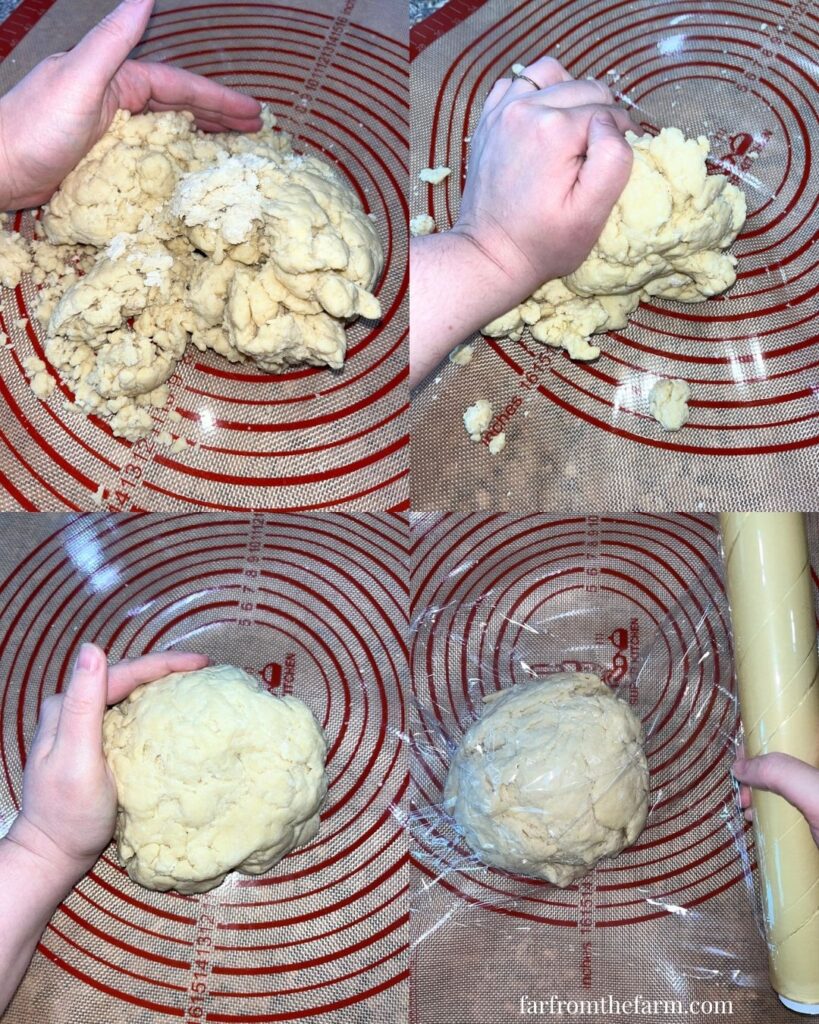
Step 3: Rest the dough
Wrap the dough tightly in plastic wrap and place it in the refrigerator for at least 30 minutes, or up to overnight.
This resting time allows the flour to fully hydrate and the gluten to relax. The dough becomes much easier to roll out and the noodles hold together better during cooking.
Step 4: Roll the dough
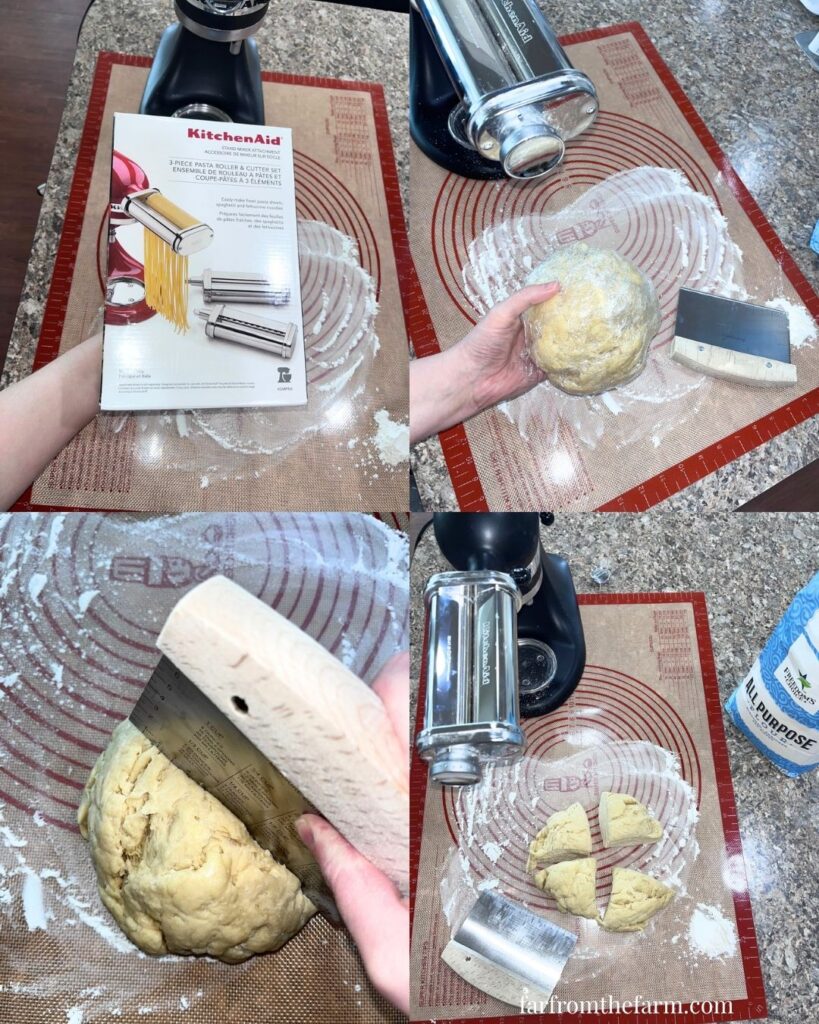
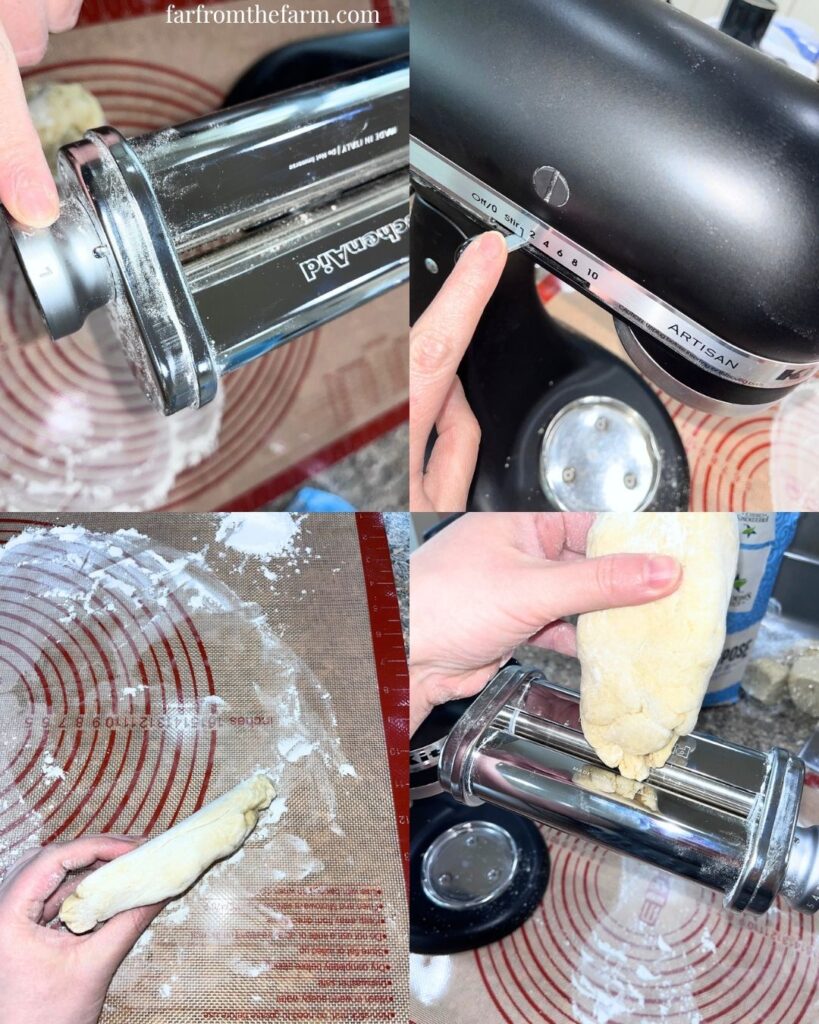
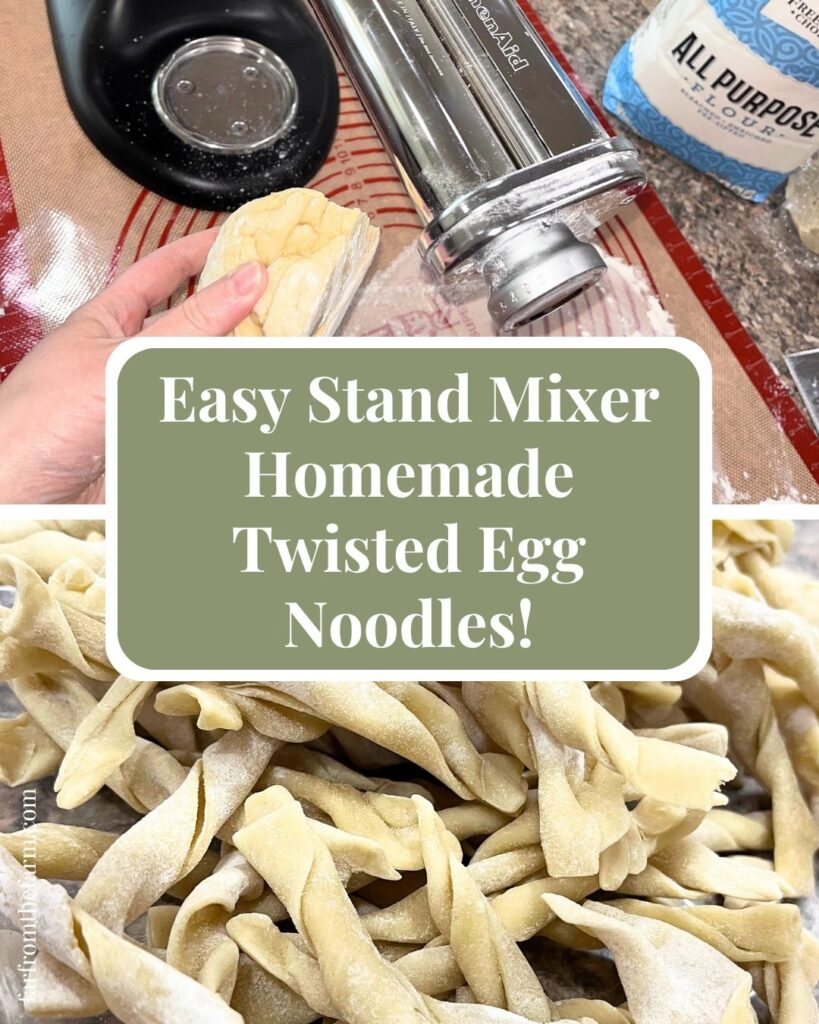
Divide the dough into four to six portions, squashing each on down with your hands slightly to make rolling out and cutting the dough easier to manage.
Using either a rolling pin or a KitchenAid pasta roller attachment, roll the portions of eg noodle dough into thin sheets, starting at setting 1.
Passing each piece of dough through setting 1 a few times is also a good tip to help loosen up stiff dough to make it easier to work with!
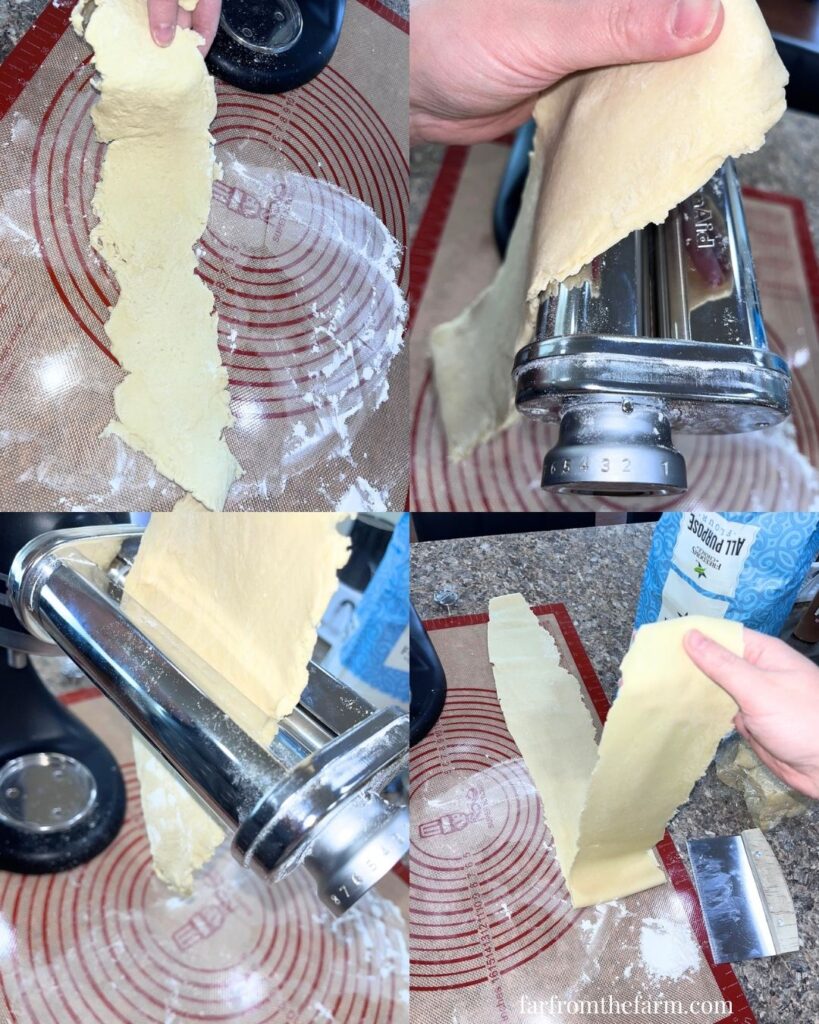
If using the KitchenAid pasta roller, setting 5 or 6 creates a classic egg noodle thickness, because they will puff up whilst cooking.
Step 5: Cut and shape the noodles
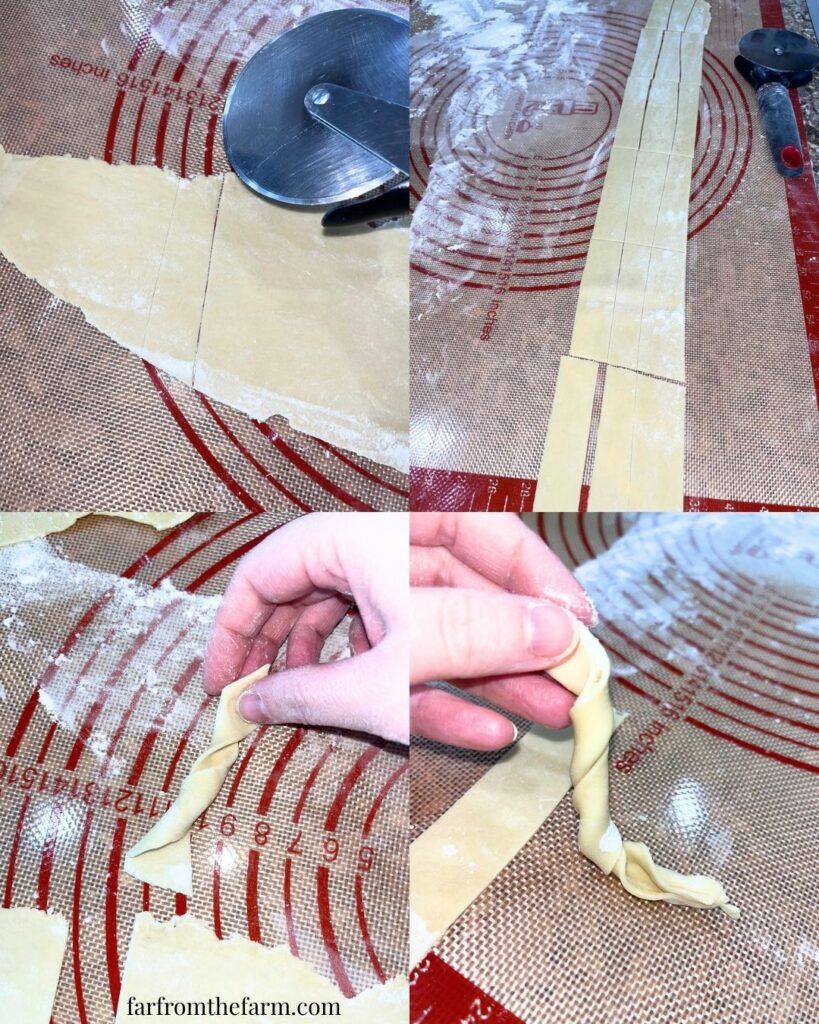
Lay each sheet of rolled dough flat on your work surface.
Using a knife or pizza cutter, cut the dough into strips about 1/4 to 1/2 inch wide, and 5 to 7 inches long.
Hold each strip by one end and gently twist it several times to create the classic rustic homemade egg noodle shape. Place the twisted noodles onto a parchment-lined baking sheet in a single layer.
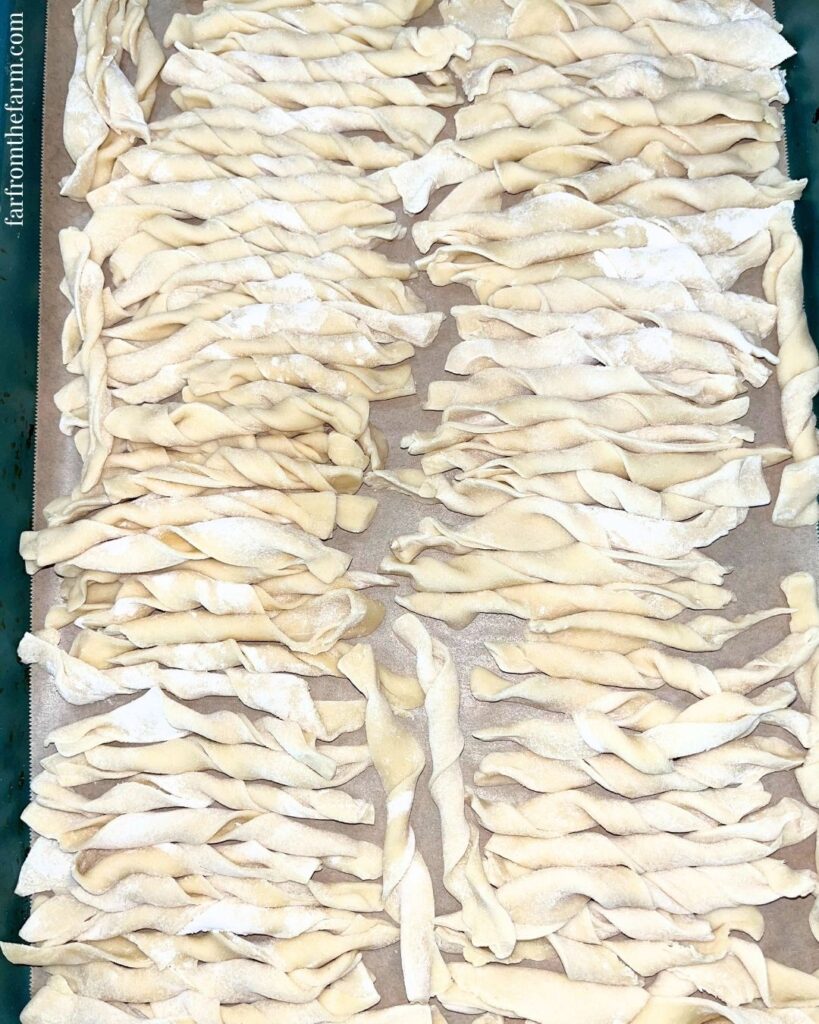
Don’t worry if every noodle looks a little different. Their rustic shape is part of what makes homemade egg noodles so special.
Step 6: Dry or freeze the noodles (optional)
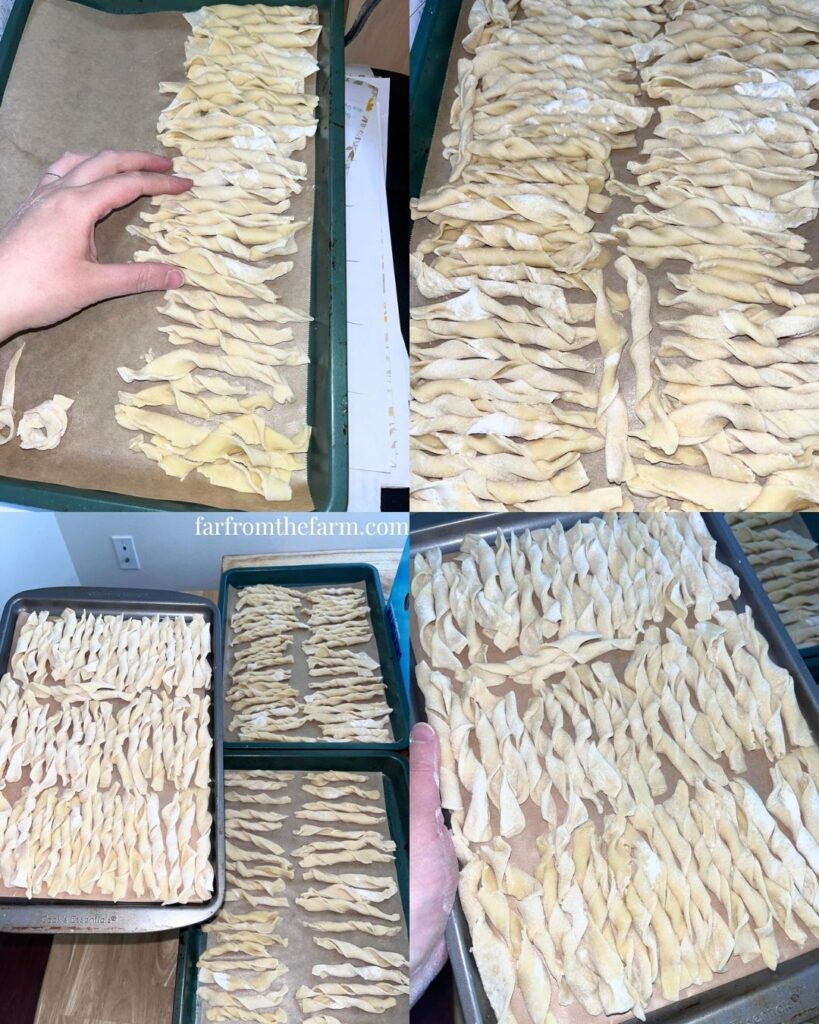
You can air-dry the egg noodles overnight on a parchment-lined baking sheet until they are no longer tacky, and then store them for a week in an air tight container.
Or if you plan to freeze the noodles, dry them first as above, then place them in a good quality freezer bag for up to 3 months.
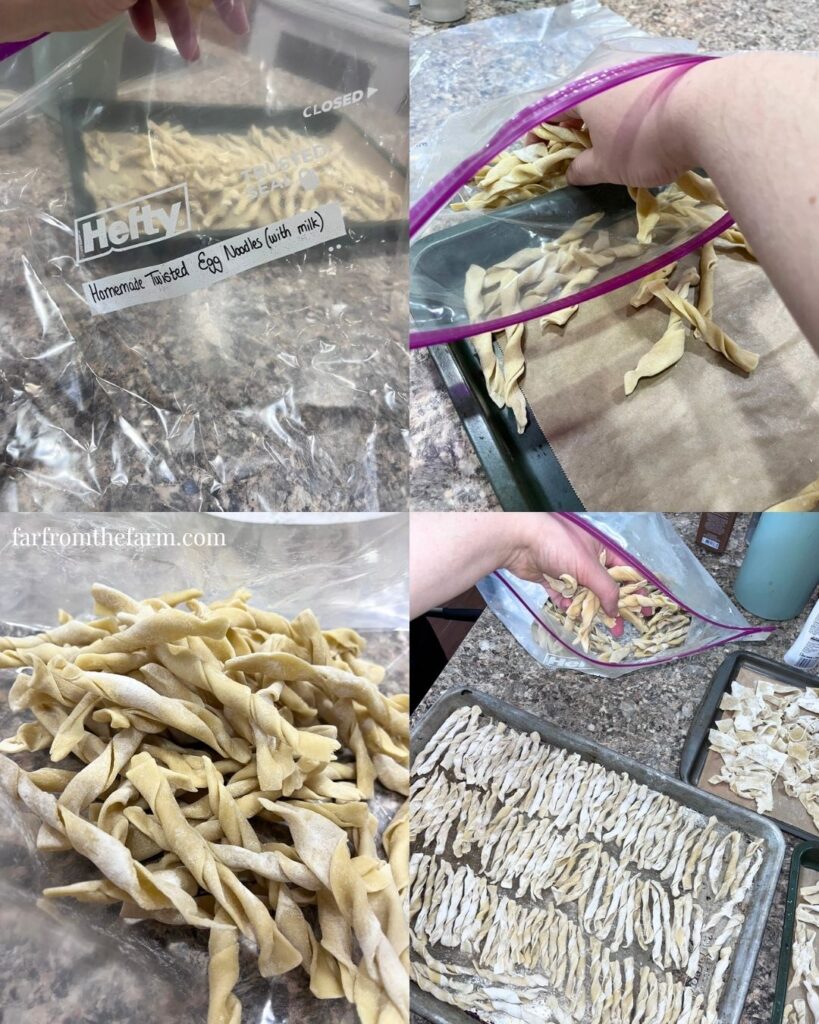
Step 7: Cook the noodles
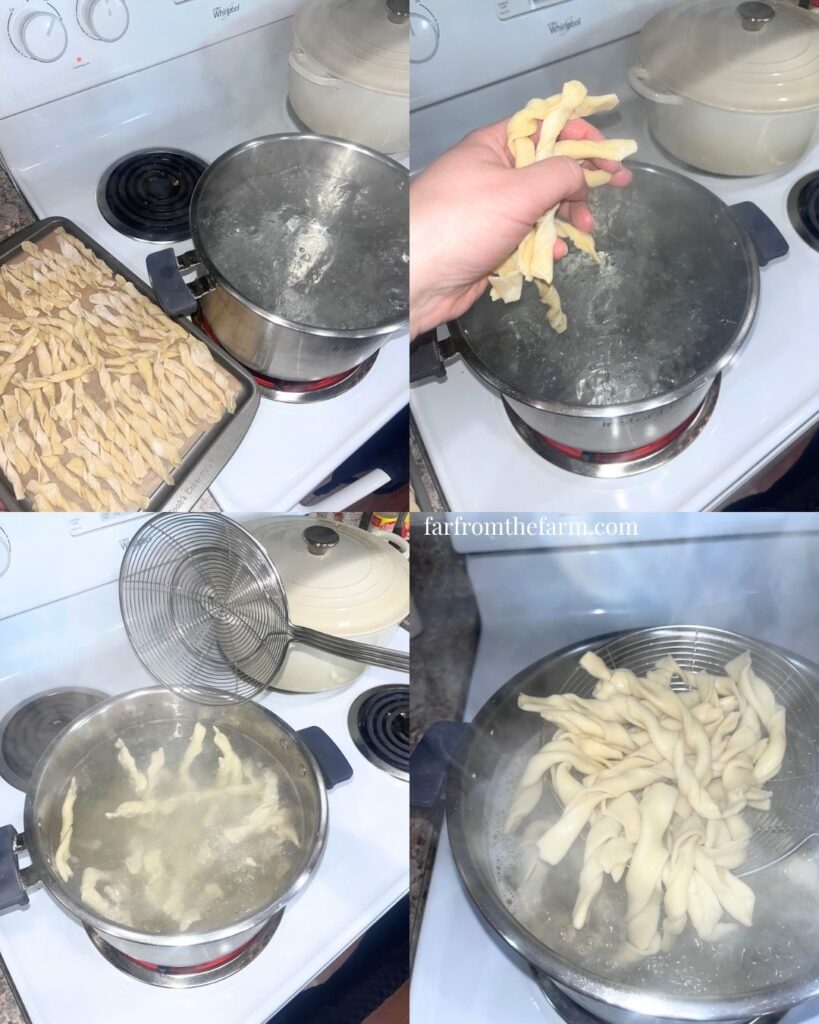
Bring a large pot of well-salted water to a rolling boil.
Add the homemade egg noodles to the boiling water and cook for about 3 minutes if fresh, or 5 to 7 minutes if dried or frozen, until tender.
You’ll notice a few of the noodles begin to float as they finish cooking.
For frozen or dried egg noodles it’s best to start testing a noodle every minute from the 5-minute mark, as homemade egg noodles can overcook quickly and become soft and soggy if left in the water too long.
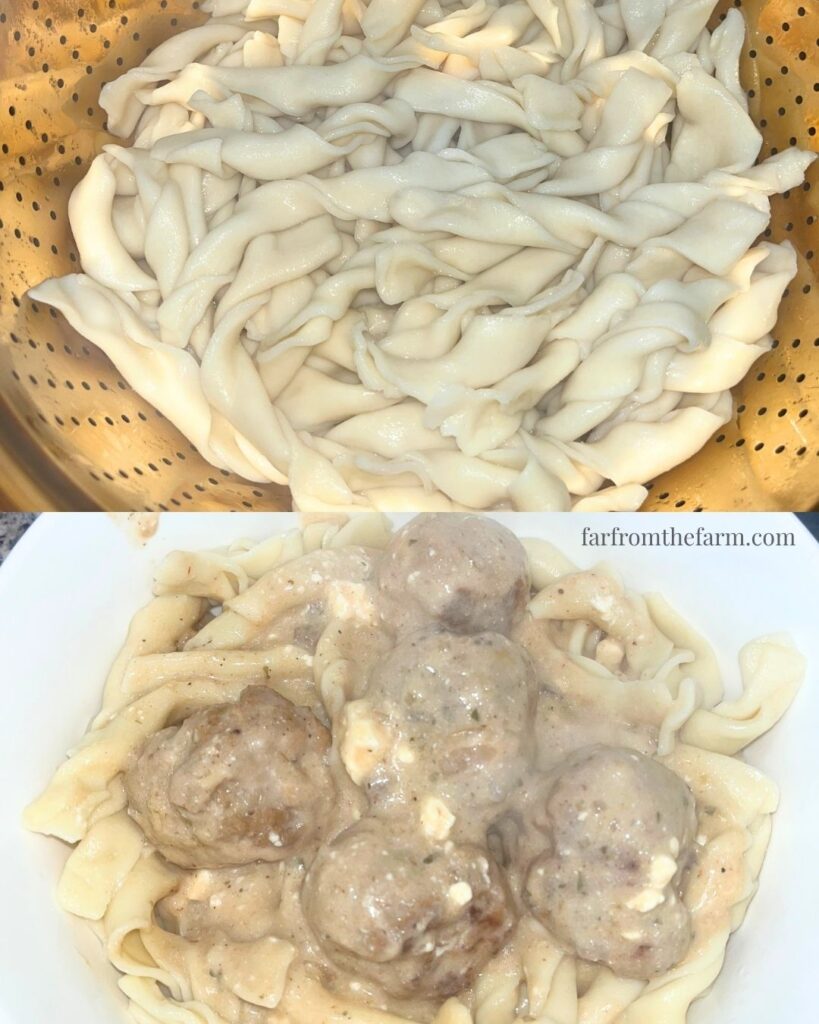
Drain and serve immediately. Enjoy!
Notes
- This dough is intentionally firm. A slightly dry dough rolls better and keeps its noodle shape.
- If the dough feels too sticky, add a tablespoon of flour at a time while kneading.
- If it feels too dry to come together, add a teaspoon of milk.
- Fresh egg noodles cook very quickly compared to boxed pasta.
Troubleshooting
Noodles sticking together?
Lightly dust with flour before cutting.
Noodles falling apart while boiling?
Dough may have been rolled too thin.
Dough shrinking while rolling?
Let it rest another 10 minutes to relax the gluten.
Storage
- Fresh noodles can be cooked immediately or dried.
- To dry noodles, spread them on a cookie sheet and allow them to air dry for several hours.
- Once fully dry they can be stored in an airtight container for up to 1 week.
- Fresh uncooked noodles can also be refrigerated for 24 hours.
- If freezing – air dry first for 24 hours to prevent the noodles from sticking to each other. Store in a good quality freezer bag for up to 3 months.
Serving Ideas
- Serve with Swedish meatballs and gravy
- Toss with butter and fresh parsley
- Add to chicken noodle soup
- Serve with creamy mushroom sauce
Why You’ll Love This Recipe?!
- Only four simple ingredients
- Much better flavor than storebought noodles
- KitchenAid does most of the work
- Perfect comfort food side dish
- Budget friendly homemade staple
- Richer than traditional homemade pasta or egg noodles
FAQ
Yes. Freeze them in small portions on a baking sheet first, then transfer to freezer bags.
Yes. Air dry them completely and store in an airtight container.
No. A rolling pin works perfectly well.
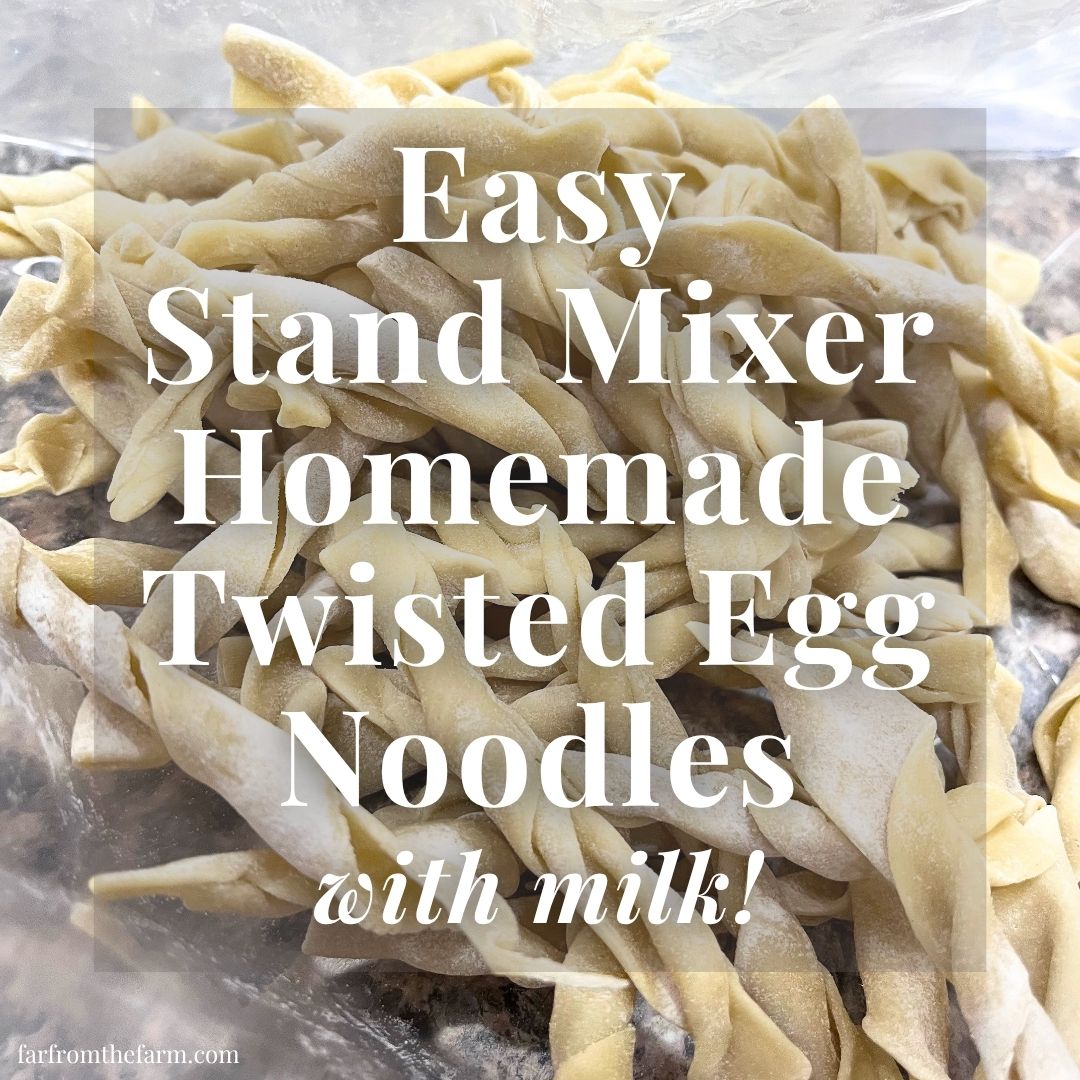
Easy Stand Mixer Homemade Twisted Egg Noodles (With Milk!)

Ingredients
Equipment
Method
- Add the eggs, salt, milk and flour to the bowl of a KitchenAid stand mixer fitted with the dough hook.
- Knead on low speed for 5–7 minutes, scraping down the bowl halfway through if needed.
- Turn the dough onto the counter and knead by hand for another 3–5 minutes until it comes together into a rough ball.
- Wrap tightly in plastic wrap and refrigerate for at least 30 minutes, or overnight.
- Divide the dough into 4 to 6 portions, squash each one down slightly, and roll each portion into thin sheets using a rolling pin or KitchenAid pasta roller. (Setting 5 or 6 works well.)
- Using a knife or pizza cutter, cut the dough into strips about 1/4 to 1/2 inch wide and roughly 5 to 7 inches long.
- Hold one end of each strip and gently twist it several times to create a loose spiral, just like traditional rustic Amish-style egg noodles. They don't need to be identical. Their homemade appearance is part of the charm.
- Lay the twisted noodles in a single layer on a parchment-lined baking sheet, leaving a little space between each one.
- If storing or freezing, allow the noodles to air-dry overnight until no longer tacky.
- Bring a large pot of well-salted water to a rolling boil.
- Add the homemade egg noodles to the boiling water and cook for about 3 minutes if fresh, or 5 to 7 minutes if dried or frozen, until tender. A few of the noodles begin to float as they finish cooking.Top Tip: For frozen or dried egg noodles it's best to start testing a noodle every minute from the 5-minute mark, as homemade egg noodles can overcook quickly and become soft and soggy if left in the water too long.
- Drain and serve immediately.
Notes
- The noodles can be cooked from fresh, dry or frozen!
- This dough is intentionally firm. A slightly dry dough rolls better and keeps its noodle shape.
- If the dough feels too sticky, add a tablespoon of flour at a time while kneading.
- If it feels too dry to come together, add a teaspoon of milk.
- Fresh noodles cook very quickly compared to boxed pasta.
Storage
- Fresh noodles can be cooked immediately or dried.
- To dry noodles, spread them on a cookie sheet and allow them to air dry for several hours.
- Once fully dry they can be stored in an airtight container for up to 1 week.
- Fresh uncooked noodles can also be refrigerated for 24 hours.
- If freezing – air dry first for 24 hours to prevent the noodles from sticking to each other. Store in a good quality freezer bag for up to 3 months.
Related Recipes
- The Best Wholewheat Fresh Egg Pasta KitchenAid Recipe!
- Our Homemade Pasta Noodles Recipes!
- Check out all the Pasta Recipes!
Nutrition information is automatically calculated, so should only be used as an approximation.
Looking for more homemaking inspiration?

It’s so important to be part of a community that not only understands you but that champions you, encourages, challenges and cheers you on. We couldn’t find one – so we created it instead!
Join the Side Hustle Homemakers Team Julie, Sam and I over at the Recipes, Homesteading and More! Facebook Group for Food Blogging Tips, Homesteading and Homemaking content and encouragement!
We’re 3 very different US/UK military families who met and became instant forever friends. We share what’s working in our kitchens, gardens, homes and more!
We created the group to share real life around recipes, homesteading, homemaking and more. Head on over, say Hi, share you tips and gain some friends and knowledge along the way!
The Takeaway
Once you make homemade twisted egg noodles even one time it becomes very difficult to go back to the bagged kind.
They cook quickly, taste richer, and turn simple comfort food dinners into something extra special!
What To Try Next?!


Share & Rate This Recipe
If you make these homemade egg and milk noodles I would love to hear how they turned out in your kitchen. Tap the stars on the recipe card and leave a quick comment below!
Last update on 2026-07-26 / Affiliate links / Images from Amazon Product Advertising API